ABV of Popular Beers, Wine and Spirits: Complete Reference Guide
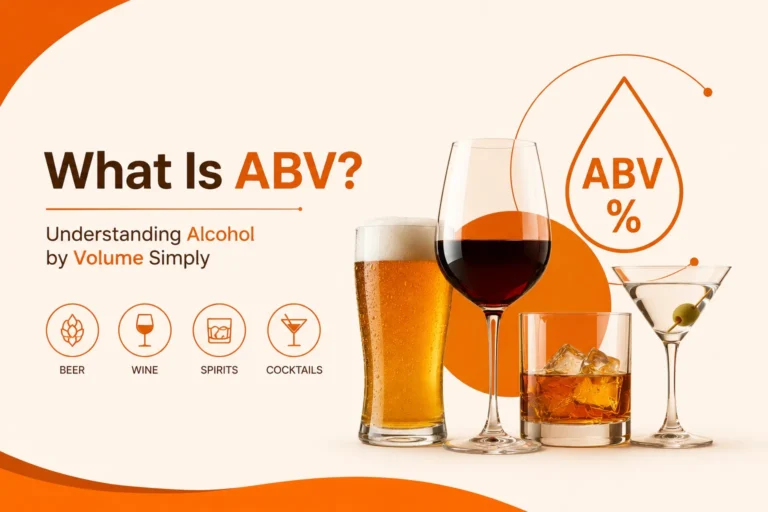
You grab a beer from the fridge, pour a glass of wine at dinner, or mix a cocktail on the weekend. The ABV number is always printed on the label, but most people never really stop to think about what it actually means across different drink types. Alcohol By Volume (ABV) is the standard measurement that tells you exactly how much pure alcohol is in any beverage, and it varies far more than most people expect.
This guide covers real ABV numbers for the most popular beers, wines, and spirits, brand by brand and category by category, so you always know what you are actually drinking.
What Is ABV and Why Does It Vary So Much
ABV, or Alcohol By Volume, is the globally standardized measure of ethanol in any beverage. To find the exact alcohol content of any drink by volume, the alcohol by volume ABV calculator gives you a precise figure instantly.
But the number alone does not tell you the full story because the same percentage means something completely different depending on whether it is on a beer can, a wine bottle, or a spirit label. A 5% beer and a 5% wine feel nothing alike in the glass, and a 40% spirit is in a different category entirely.
Beer ABV: From Light Lagers to Imperial Stouts
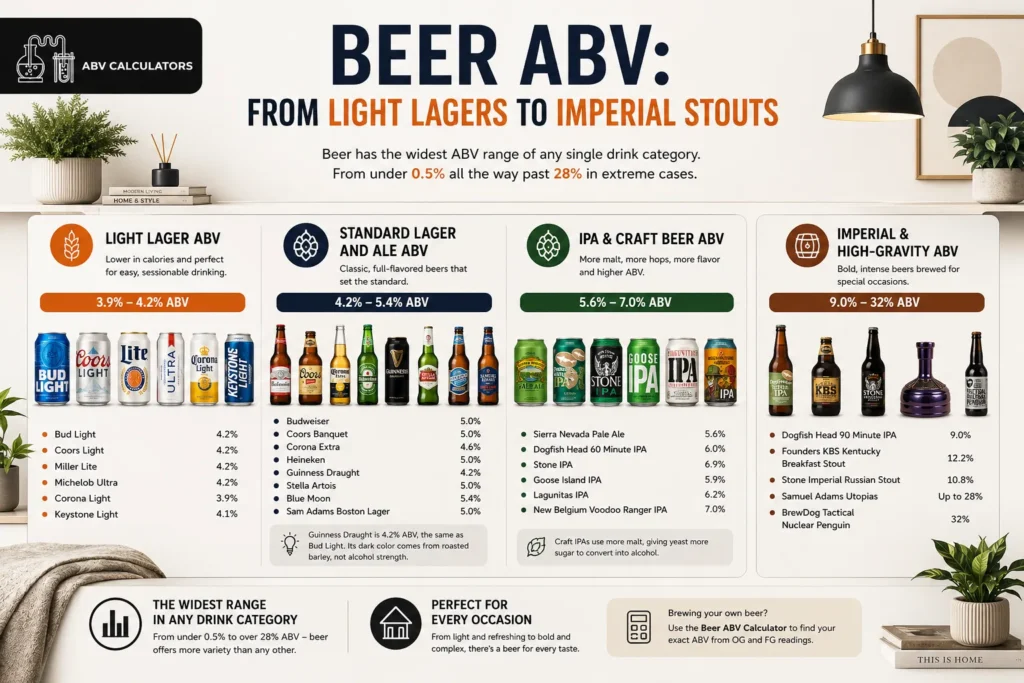
Beer has the widest ABV range of any single drink category. Depending on the style and brewing approach, beer can sit anywhere from under 0.5% all the way past 28% in extreme cases. Most everyday beers you find at a grocery store or bar fall between 4% and 6%, but craft and specialty styles push well beyond that range.
Commercial breweries measure fermentable sugar in degrees Plato rather than specific gravity. To convert Plato readings to SG, use the Plato to Gravity Calculator.
Light Lager ABV
Light lagers are designed to be sessionable, meaning you can drink more than one without the alcohol adding up quickly. Brewers achieve this by using fewer fermentable sugars in the recipe and in some cases filtering out additional carbohydrates after fermentation. The result is a beer that is lower in both alcohol and calories compared to a standard lager.
Standard Lager and Ale ABV
Standard lagers and ales sit in the classic beer range. These are full-flavored beers brewed without any special reduction in sugar or alcohol content. They represent the baseline of what most people picture when they think of a regular beer.
One thing worth knowing about Guinness specifically. Many people assume it must be a heavy, high-alcohol beer because of its dark color, thick appearance, and creamy texture. In reality, Guinness Draught is 4.2% ABV, exactly the same as Bud Light. The dark color comes from roasted barley used during brewing, not from extra alcohol. Color has no relationship to strength.
IPA and Craft Beer ABV
Craft beers, especially IPAs, tend to run noticeably higher than mainstream lagers. This is because craft brewers typically use more malt in their recipes, which means more fermentable sugars available for yeast to convert into alcohol. The hop-forward flavor IPAs are known for also pairs naturally with slightly higher alcohol content, which provides more body and balance against the bitterness.
Imperial and High-Gravity Beer ABV
Imperial beers are brewed with significantly higher grain and sugar concentrations from the very beginning. More fermentable sugar means yeast has more material to work through, which results in a much higher final alcohol content. These are not everyday session beers. They are sipped slowly in smaller quantities, similar to how you would approach a strong wine or a spirit.
Non-Alcoholic Beer ABV
Non-alcoholic beers are not completely alcohol-free in most cases. They still contain trace amounts of alcohol from the fermentation process. The alcohol is either removed after fermentation through dealcoholization methods, or fermentation is stopped very early before much alcohol can develop.
If you are using a home brew abv calculator for your own beer recipe and want to calculate the exact ABV from your gravity readings, it gives you an accurate result instantly using Original Gravity and Final Gravity values
Hard Seltzer ABV by Brand: White Claw, Truly, Bud Light & More
Hard seltzers entered the mainstream around 2018 and quickly became one of the fastest growing drink categories. They are made by fermenting a sugar or grain base, then carbonating the result with water and adding natural flavors. The appeal is a lighter, lower calorie alternative to beer that still delivers a similar alcohol content.
Most major brands have settled on a consistent ABV range, which makes hard seltzers predictable in terms of strength compared to craft beer where ABV can vary widely between styles.
The standard hard seltzer at 5% ABV sits at exactly the same alcohol level as a regular lager like Budweiser or Heineken. The surge and extra hard variants move into craft beer territory and should be treated accordingly.
Wine ABV by Type: Red, White, Sparkling and Fortified Explained
Wine ABV is determined by two main factors: how much natural sugar the grapes contain and how far fermentation is allowed to run. Grapes grown in warmer climates tend to be riper and higher in sugar, which gives yeast more to ferment and typically results in higher ABV wines. When fermentation runs to completion, almost all the sugar is converted to alcohol. When fermentation is stopped early, some sweetness remains in the wine but the ABV is lower.
Winemakers measure grape sugar in degrees Brix before harvest to predict final ABV. If you need to convert that reading, a brix to abv calculator gives you an instant result.
White Wine ABV
White wines range quite significantly in ABV depending on the grape variety and the style the winemaker is aiming for. Lighter, sweeter whites like Moscato sit at the low end because fermentation is intentionally stopped before all the sugar converts. Richer, fuller whites like Chardonnay are fermented more completely and often in warmer regions, pushing their ABV higher.
Red Wine ABV
Red wines tend to run slightly higher in ABV than most white wines. This is partly because red grape varieties like Cabernet Sauvignon and Zinfandel are often grown in warmer climates where sugar accumulation in the grape is higher. Red wines are also fermented with their grape skins, which contributes to fuller body and often slightly higher alcohol levels.
Sparkling Wine ABV
Sparkling wines are typically lower in ABV than still wines of the same grape variety. This is because the secondary fermentation that creates the bubbles happens in a sealed environment where only a limited amount of additional alcohol can develop. The result is a wine that feels lighter and more refreshing while still having enough alcohol to be noticeable.
Fortified Wine ABV
Fortified wines have distilled spirits, usually grape brandy, added to them either during or after fermentation. When added during fermentation, the added alcohol kills the yeast before it can convert all the sugar, which is why fortified wines like Port tend to be sweet as well as strong. The added spirit pushes ABV well above what natural fermentation alone could achieve.
If you are working with wine, cider, or mead and want to calculate the ABV from your own fermentation, the Wine, Cider and Mead ABV Calculator uses your gravity readings to give you a precise number.
Spirits ABV by Category: Vodka, Whiskey, Rum, Tequila & More
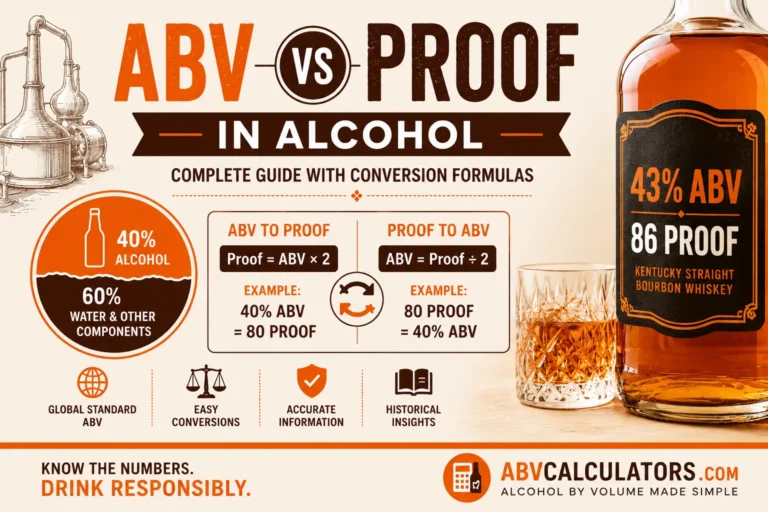
Spirits are distilled beverages, which means their ABV is dramatically higher than anything produced through fermentation alone. Most countries set a minimum bottling ABV of 40% for standard spirits sold commercially. ABV and proof are related but not the same measurement. For a complete breakdown of how they differ, see the ABV vs Proof guide.
This 40% figure is not arbitrary. It became an industry standard over centuries of production and regulation because it represents a balance between strength, flavor expression, and palatability.
Complete Spirits and Brand ABV Reference Table
Spirit
Vodka
Gin
Navy Strength Gin
Bourbon
Scotch Whisky
Cask Strength
Tequila
Mezcal
White Rum
Overproof Rum
Brandy and Cognac
Liqueurs
Absinthe
Everclear
ABV Range
40%
40 to 47%
57%+
40 to 50%
40 to 46%
55 to 65%
38 to 40%
40 to 55%
40%
57 to 75%
40%
15 to 35%
45 to 74%
60 to 95%
Popular Brand Examples
Tito’s (40%), Grey Goose (40%), Absolut (40%)
Tanqueray 47.3%, Hendrick’s 41.4%
Plymouth Navy Strength (57%)
Jack Daniel’s 40%, Maker’s 45%, Woodford 45.2%
Johnnie Walker Black 40%, Glenfiddich 12yr 40%
Booker’s (63%), Wild Turkey Rare Breed (58.4%)
Don Julio 40%, Patron 40%, José Cuervo 38%
Del Maguey (46%), Ilegal (40%)
Bacardi Superior (40%), Havana Club (40%)
Wray and Nephew (63%)
Hennessy VS (40%), Rémy Martin VSOP (40%)
Baileys (17%), Kahlua (20%), Amaretto (21-28%)
Pernod (68%), Lucid (62%)
Pernod (68%), Lucid (62%)
One important correction worth making here. Tequila is frequently listed as 50 to 51% ABV on several popular websites. This is incorrect. Standard tequila is 38 to 40% ABV according to both Mexican production regulations and international bottling standards. Don Julio, Patron, and Jose Cuervo all sit in this 38 to 40% range. If you see 50% listed elsewhere, that information is wrong.
Sake, Soju, Mead and Hard Cider ABV
These four categories often get left out of ABV guides, but they have real drinkers asking real questions about them and they deserve proper coverage.
Cocktail ABV: What Mixing Does to Strength
A cocktail’s ABV is never the same as the spirit’s ABV. When you mix alcohol with ice, juice, soda, or other ingredients, the total volume increases significantly while the amount of pure alcohol stays the same. This dilution brings the overall ABV of the drink down considerably, which is why cocktails can feel more approachable to drink than a straight pour of the same spirit.
General cocktail ABV ranges based on common drink types:
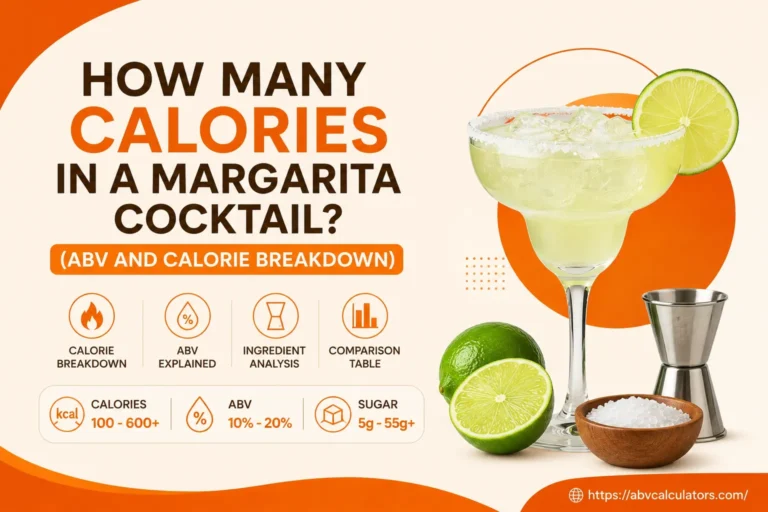
A standard Margarita made with 1.5oz tequila, 0.5oz triple sec, and fresh lime juice lands around 13 to 15% ABV after accounting for dilution. That is significantly lower than the 40% tequila it is built from. The mixing process changes everything about how a drink reads on paper versus how the straight spirit would.
For an exact ABV number on any cocktail you are making at home, the cocktail calculator bar calculates your precise result based on the actual ingredients and volumes you use.
What Is the Highest ABV Drink Ever Produced
Everclear 190 at 95% ABV is the highest commercially available spirit sold in many US states. At that concentration it is essentially pure ethanol with a small amount of water. It is not meant to be consumed straight and is used primarily as a base for infusions, homemade liqueurs, or diluted cocktail applications.
Spirytus Rektyfikowany, a Polish rectified spirit, reaches 96% ABV and is commercially available in Poland and several other markets. It holds one of the highest ABV figures of any legally sold spirit in the world.
For beer specifically, Samuel Adams Utopias at 28% and BrewDog Tactical Nuclear Penguin at 32% represent the record territory for what can still technically be classified as beer. These are achieved through special fermentation techniques including freeze concentration, which removes water from the finished beer to push alcohol content higher than standard fermentation alone would allow.
How ABV Compares Across Every Drink Category
Seeing the full spectrum in one place makes it easier to understand how different drinks relate to each other in terms of actual alcohol content. One of the most useful things to understand about ABV is that the same amount of pure alcohol looks completely different depending on what you are drinking.
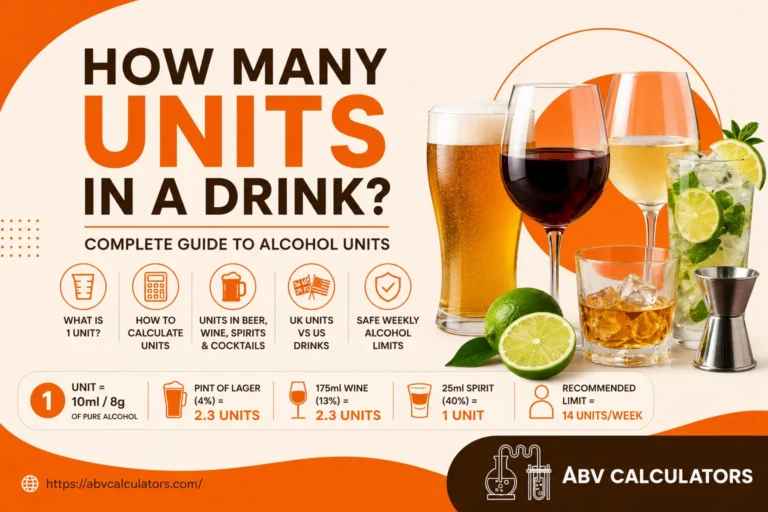
The table below shows standard serving sizes as they are actually poured, each calibrated to deliver approximately one standard drink (14g pure ethanol).
ABV and Calories: What the Numbers Mean Together
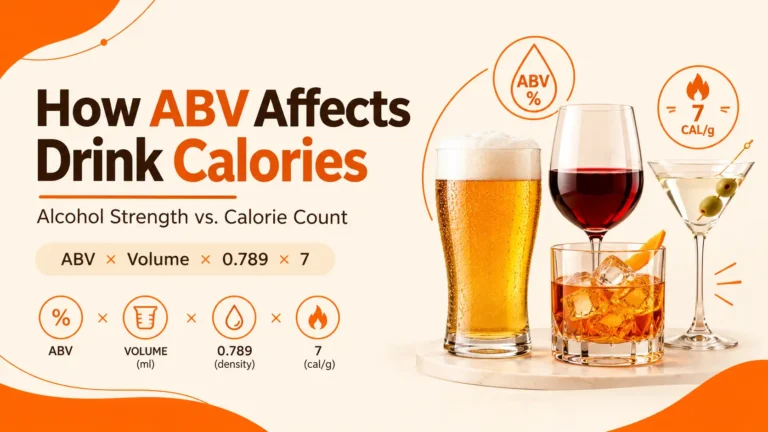
ABV is the biggest single driver of calories in any drink, but it is not the only one. Residual sugar adds calories independently of alcohol, which is why two drinks at the same ABV can have noticeably different calorie counts. The table below shows real numbers for popular brands so you can see exactly how ABV and calories relate across the drinks most people actually consume.
For beer, the same thing explains why Miller Lite at 4.2% has fewer calories than Guinness Draught at the same4.2%. Same ABV, different residual extract, different calorie count.If you want to understand exactly how calories break down in a specific cocktail, the MargaritaCalories guide covers this in full detail with the actual numbers behind a standard recipe.
Frequently Asked Questions (FAQs)
Conclusion
ABV varies more than most people realize across different drink categories. From 0.5% non-alcoholic beer to 95% rectified spirit, understanding the numbers helps whether you are brewing at home, mixing cocktails, comparing drinks, or simply curious about what is actually in your glass.
If you brew your own beer, wine, mead, or cider and want to calculate your exact ABV from gravity readings, theABV Calculator gives you an instant and accurate result using the standard brewing formula.