What Is ABV? A Complete Guide to Alcohol by Volume
You have seen it on every bottle, can, and cocktail menu. That little percentage sitting next to the word ABV. Most people know it has something to do with alcohol strength, but very few understand exactly what it means, why it matters, or how to use it to make smarter choices about what they drink. This guide covers everything from the basic definition to brand-specific ABV numbers, how your body processes alcohol, and how brewers calculate it from scratch.
What Does ABV Stand For?
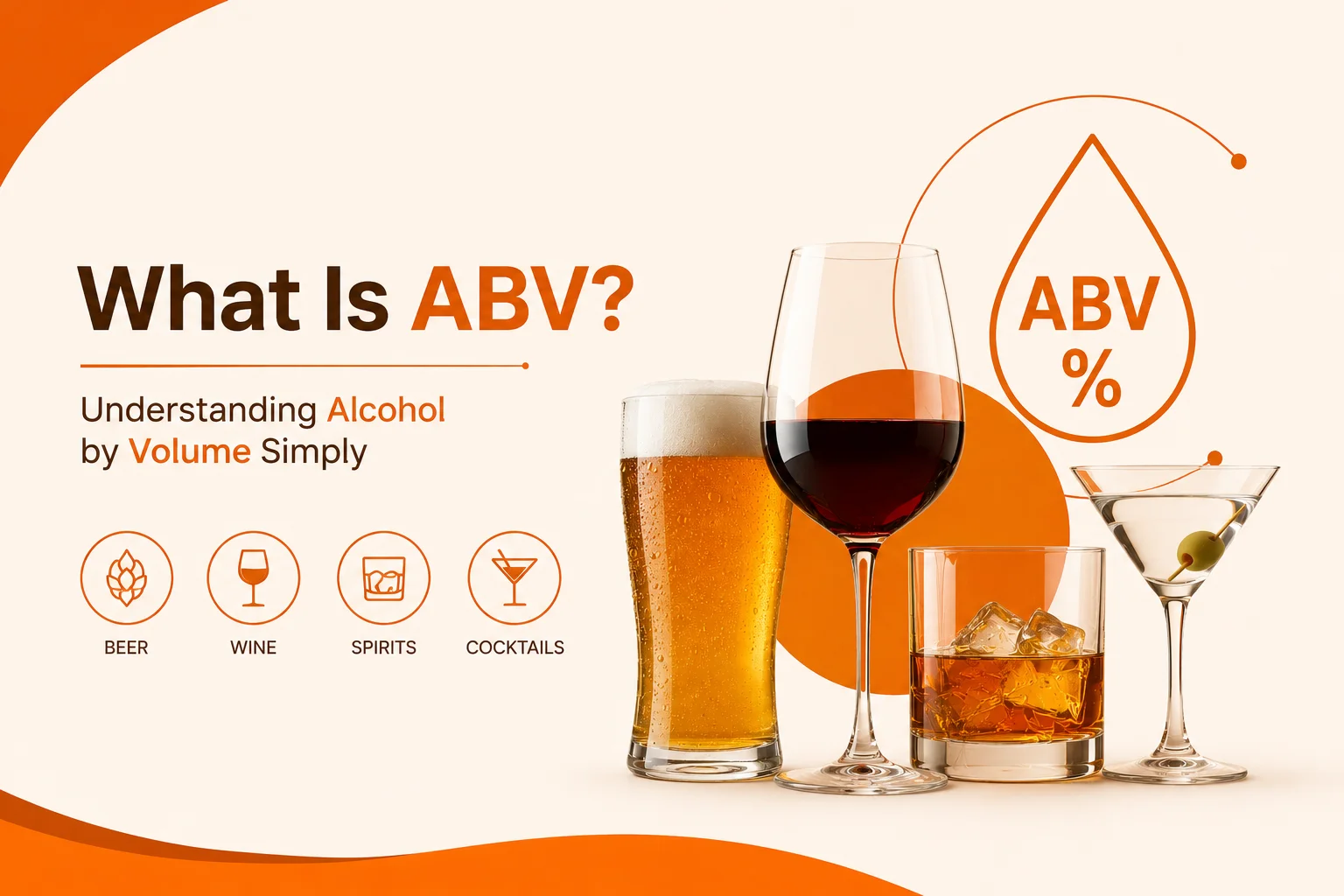
ABV stands for Alcohol by Volume. It is the globally accepted standard for measuring how much pure alcohol is present in any alcoholic beverage, expressed as a percentage of the total liquid volume.
When a beer label says 5% ABV, it means that 5 millilitres out of every 100 millilitres in that drink is pure ethanol. The other 95 millilitres is water, flavour compounds, sugars, carbonation, and everything else that makes the drink taste the way it does.
ABV is always measured at a standard temperature of 20°C (68°F). This matters because liquid expands when warm and contracts when cold, which affects density. Measuring at a fixed temperature keeps results consistent and comparable across producers and countries.You will see ABV written as ABV, alc/vol, or as a percentage followed by “vol” on European labels. Every country that regulates alcohol uses ABV as its standard unit. Whether you are buying a beer in Tokyo, a wine in Bordeaux, or a whiskey in Kentucky, ABV means the same thing everywhere.
Why Does ABV Matter?
ABV is not just a number for the label. It is practical information that affects how you drink, how you serve, and how you brew.
ABV Ranges for Every Type of Alcohol
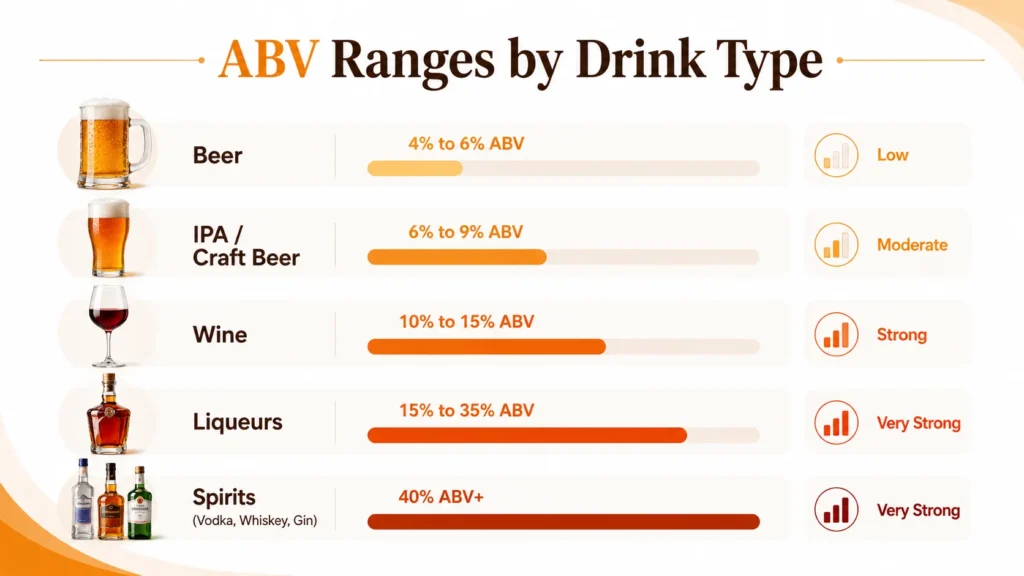
Not all drinks are equal in strength. ABV varies significantly between drink categories and even within them. Understanding the typical ranges helps you set realistic expectations before you pick up a glass.

Beer ABV
Beer ABV covers one of the widest ABV ranges of any drink category. The same word describes everything from a0.5% non-alcoholic lager to a 14% imperial stout. Here is how beer breaks down by style:
Non-alcoholic beer sits at 0.0 to 0.5% ABV. These are brewed using standard methods and then dealcoholized, or fermented at conditions that limit alcohol production.
Session lager and session ale fall between 2.8 and 4.0% ABV. The term“session” comes from UK pub culture, where it describes a drink light enough to consume over an extended period without rapid intoxication.
Light lagers like Bud Light, Coors Light, and Miller Lite sit at 4.0 to 4.5% ABV. Standard American lagers like Budweiser sit at 4.5 to 5.0%. German Helles and Czech Pilsner are similar, typically 4.5 to 5.2%.
Pale ales and American IPAs range from 5.5 to 7.5% ABV. Double IPAs and Imperial IPAs push into 8 to 12% territory. Imperial Stouts and Barleywines are the strongest common beer styles, regularly reaching 10 to 15% ABV.
If you order a “craft beer” at a bar without checking the ABV, you may be drinking something twice as strong as a standard lager without realizing it. Use a beer strength calculator to check before you order.
Wine ABV
Wine ABV is driven largely by grape sugar content and how completely fermentation runs. More sugar means more potential alcohol.
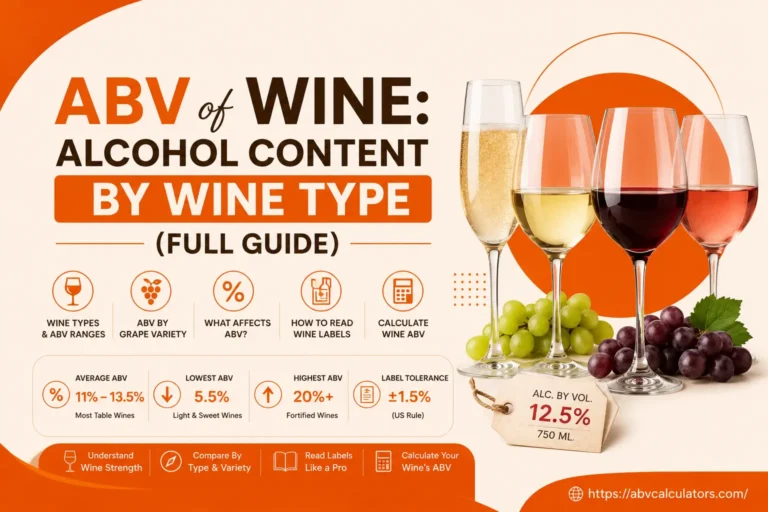
White wines generally average 10 to 12% ABV, with lighter styles like Moscato (5 to 7%) and German Riesling (7 to 9%) on the lower end, and Chardonnay (13 to 14.5%) on the higher end. Pinot Grigio typically sits at 12 to 13%.
Red wines generally run higher than whites, averaging 12 to 15% ABV. Pinot Noir sits at 13 to 14%, Malbec at 13.5 to 15%, and California Zinfandel can reach 15 to 18%. Australian Shiraz commonly sits at 14 to 16%.
Sparkling wines including Champagne and Prosecco typically sit at 10 to 12% ABV. Fortified wines including Sherry, Port, and Madeira have a distilled spirit added during production, pushing ABV to 17 to 21%.A 5oz pour of Pinot Grigio and a 5oz pour of California Zinfandel look identical in the glass. The Pinot Grigio might be 12.5% ABV while the Zinfandel sits at 16%. In practical terms, that single glass difference is significant over the course of an evening.
Spirits ABV
Spirits are distilled rather than simply fermented. Distillation concentrates alcohol by heating the fermented liquid and collecting the vapour, which is why spirits sit at much higher ABV than beer or wine.
Most standard spirits sit between 37.5% and 50% ABV. Vodka typically ranges from 37.5 to 46%, gin from 37.5 to 47%, and most whiskeys, rums, and tequilas sit at 40 to 46%. Cask strength whiskeys that are bottled without dilution can reach 55 to 65% ABV.
Liqueurs are lower than standard spirits, typically 15 to 35% ABV depending on style. Aperol sits at 11%, Campari at 25%, and amaretto at 21 to 28%.At the extreme end, overproof rums can reach 75.5% ABV and Everclear grain alcohol reaches 95% ABV. These are not typical drinking spirits and require significant dilution before consumption.
Hard Cider ABV
Hard cider is made from fermented apple juice. Its ABV range sits close to beer, typically between 4.5% and7%. Dry ciders ferment more completely and trend toward the higher end. Sweet hard ciders either stop fermentation early or are back-sweetened after fermentation, keeping ABV lower and adding residual sweetness.Traditional farmhouse ciders from the UK and France can vary more widely, with some reaching8% or above depending on apple variety and production method.
Cocktail ABV
Cocktail ABV varies more than any other drink category because it depends entirely on what goes into the glass and how much of each ingredient is used.
A session cocktail like an Aperol Spritz sits around 8 to11% ABV after dilution from ice and soda. A spirit-forward cocktail like a Martini or Old Fashioned can reach 25 to 35% ABV even after stirring and dilution. The same cocktail menu can contain drinks that are three times stronger than each other while looking similar in the glass.
The factors that determine cocktail ABV are the ABV of each spirit used, the volume of each ingredient, the volume of non-alcoholic mixers, and the dilution added by ice during shaking or stirring.
Popular Brand ABV Quick Reference
One of the most common ABV questions is simply asking what the ABV of a specific brand is. Here is a reference for the most widely searched brands:
Quick Conversion Table (40% to 70% ABV)
Brand
Bud Light
Budweiser
Coors Light
Coors Banquet
Miller Lite
Michelob Ultra
Busch Light
Natural Light
Guinness Draught
Stella Artois
Corona Extra
Yuengling Lager
Don Julio Blanco
Jack Daniel’s Old No. 7
Tito’s Handmade Vodka
Fireball Cinnamon Whisky
Everclear 190
De Kuyper Triple Sec
Sake
Soju
Type
Light lager
American lager
Light lager
American lager
Light lager
Light lager
Light lager
Light lager
Irish dry stout
Belgian lager
Mexican lager
American amber lager
Tequila
Tennessee whiskey
Vodka
Flavored whiskey liqueur
Grain alcohol
Liqueur
Rice wine
Korean distilled spirit
ABV
4.2%
5.0%
4.2%
5.0%
4.2%
4.2%
4.1%
4.2%
4.2%
5.0%
4.6%
4.4%
40%
40%
40%
33%
95%
15%
15 to 17%
16 to 25%
ABV can vary slightly between markets and product batches. Always check the label of the specific bottle you are buying for the most accurate figure.
What Is a Standard Drink and How Does ABV Affect It?
A standard drink is a unit used in public health guidelines to help people track how much alcohol they are consuming. In the United States, one standard drink contains 14 grams of pure alcohol, which equals approximately 0.6 fluid ounces.
Because different drinks have different ABV percentages and are served in different volumes, the same amount of alcohol looks very different depending on what you are drinking.
One standard drink in the US equals:
To calculate how much pure alcohol is in any drink, multiply the volume by the ABV percentage:
ABV % × Total Volume = Total Alcohol in Drink
Example: A 16oz craft beer at 8% ABV 0.08 × 16 = 1.28oz pure alcohol = approximately 2 standard drinks
That single pint of strong craft beer counts as two standard drinks. Someone who thinks they had one drink actually consumed the alcohol equivalent of two. This is why ABV awareness matters beyond simply knowing a drink is strong.
Is 5% ABV a Lot? Understanding High and Low ABV
Whether 5% ABV is “a lot” depends entirely on what you are comparing it to.
In the context of beer, 5% ABV is completely standard. Most commercial lagers and popular beers sit right at 5%. In the context of spirits, 5% would be extremely low since a standard vodka is 40% ABV. In the context of wine, 5% is on the lower end since most table wines sit between 11% and 14%.
Here is how to think about ABV levels across drink categories:
How Does ABV Affect Flavor and Drinking Experience?
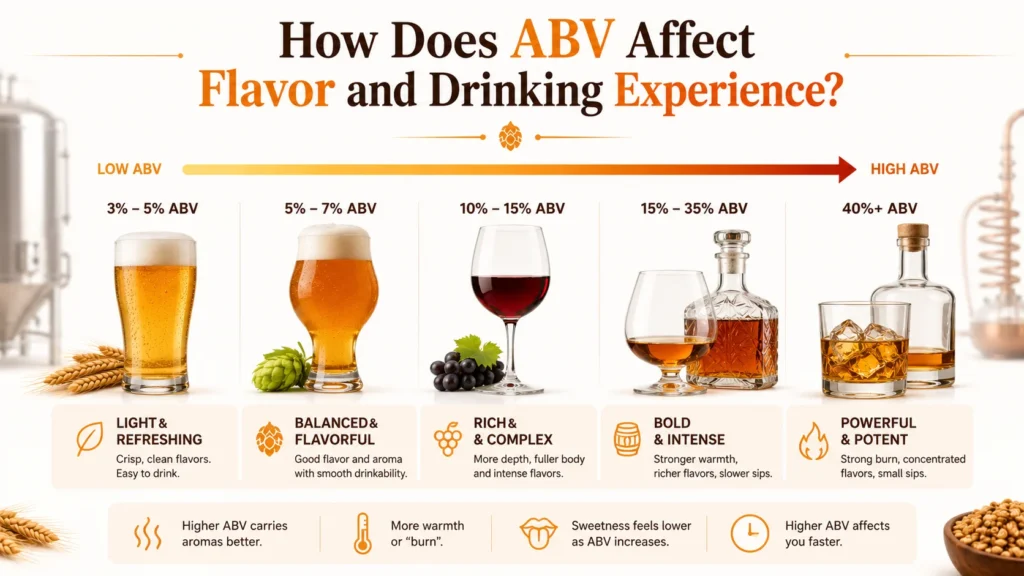
ABV does not just tell you how strong a drink is. It directly shapes how a drink tastes and how it feels to drink.
Higher ABV beverages tend to have more intense, concentrated flavors. In whiskey, the higher alcohol concentration carries aromatic compounds more efficiently to your nose, which is why cask strength whiskeys often smell more complex than their diluted versions. The alcohol itself creates a warmth or “burn” sensation that becomes more pronounced as ABV increases.
In beer, higher ABV styles like Imperial Stouts and Barleywines have rich, complex malt character precisely because the higher grain bill that produces the alcohol also produces deeper flavors. Lower ABV session beers prioritize drinkability and refreshment over intensity.
In wine, higher ABV is often associated with riper fruit flavors and fuller body. Grapes harvested later have higher sugar content, which produces both more alcohol and more concentrated fruit character. The alcohol also affects how sweetness is perceived since high-ABV wine can taste drier than its actual residual sugar level would suggest.ABV also affects how quickly you feel the effects. A spirit-forward cocktail at 28% ABV will affect you significantly faster than a light beer at 4.2% ABV consumed at the same pace, even if the total volume of liquid in the glass is similar.
ABV vs Proof — What Is the Difference?
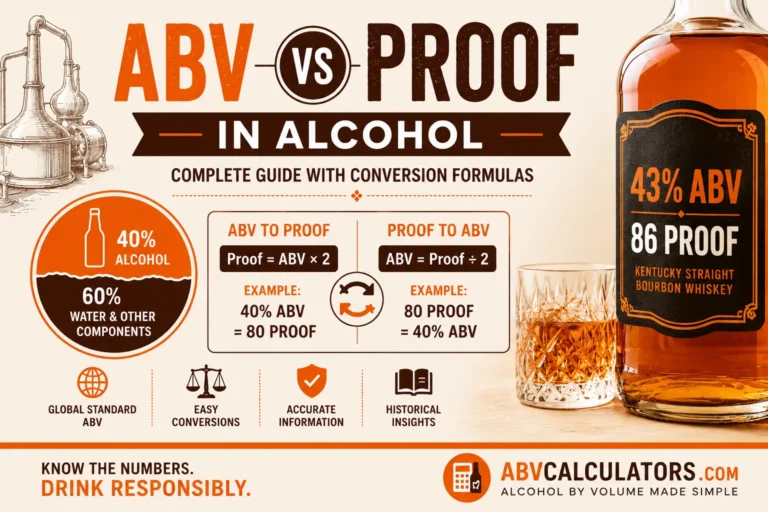
Proof is the other alcohol measurement you will see on American spirits labels. In the US system, proof is simply double the ABV, so a 40% ABV vodka is 80 proof, and a 50% ABV bourbon is 100 proof. To convert, divide proof by 2 to get ABV. Proof does not appear on beer or wine labels, and outside the United States, it is not used at all. For a complete breakdown of where proof came from, how the US and UK systems differ, and a full conversion table, see our ABV vs Proof Complete Guide.
ABV and Calories — What Is the Connection?
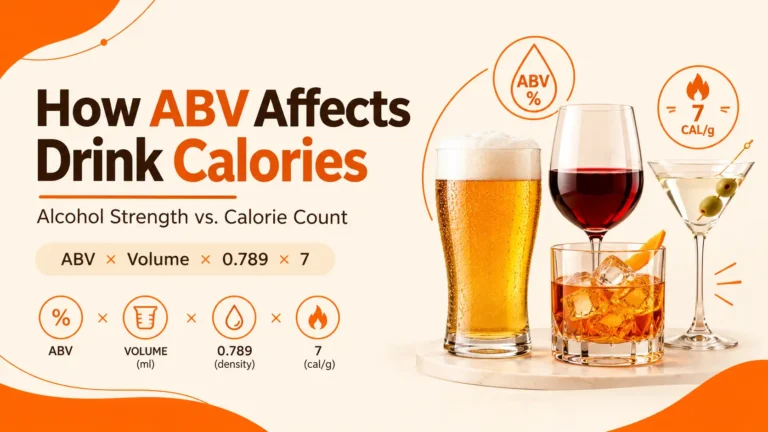
The higher the ABV, the more calories a drink contains. Alcohol delivers approximately 7 calories per gram, which means every extra percentage point of ABV adds measurable calories to your glass.
A standard 5% ABV beer in a 12oz serving contains roughly 150 calories. The same volume at 9% ABV climbs to around 230 calories. That difference comes almost entirely from the additional alcohol, not the liquid volume.
Residual sugar also adds calories independently of ABV, which is why a sweet cider at 5% and a dry cider at 5% will not have identical calorie counts. But ABV remains the biggest single factor. If you want to calculate exact calorie estimates based on your gravity readings, the alcohol ABV Calculator includes a calorie output alongside the alcohol percentage.
How ABV Affects Your Body
When you drink alcohol, ethanol enters your bloodstream through the stomach and small intestine. In a healthy person, blood circulates through the body in roughly 90 seconds, which means the effects of alcohol can begin within 15 to 45 minutes of the first drink.
The liver metabolizes approximately one standard drink per hour. This rate cannot be meaningfully accelerated by food, water, coffee, or fresh air. Alcohol leaves your system at the rate your liver processes it.Your Blood Alcohol Concentration (BAC) rises as you drink and falls at approximately 0.015% per hour as your liver works through the alcohol.
| BAC Level | Observable Effects |
| 0.02 to 0.04% | Relaxation, mild mood change |
| 0.05% | Detectible impairment begins |
| 0.07% | Driving impairment |
| 0.10% | Legal intoxication in most US states |
| 0.15% | Significant coordination impairment |
| 0.20% | Decreased consciousness possible |
| 0.30% | Risk of unconsciousness |
| 0.40% | Potentially fatal |
Several factors affect how quickly ABV affects any individual person:
Body weight plays a significant role. The same amount of alcohol distributes through a larger body mass, resulting in lower BAC.
Gender affects metabolism because women generally have lower body water percentage and lower levels of alcohol dehydrogenase enzyme, meaning the same amount of alcohol typically produces a higher BAC in women than in men of similar weight.
Food in the stomach slows alcohol absorption significantly. Drinking on an empty stomach leads to faster and more intense effects.
Age, medications, and individual metabolism also all play a role.
Understanding ABV helps you estimate how many standard drinks you are consuming, which in turn helps you pace yourself more accurately.
ABV and Alcohol Labeling Laws
ABV is a legal requirement on alcohol labels in most major markets worldwide.
In the United States, the Alcohol and Tobacco Tax and Trade Bureau (TTB) requires all distilled spirits to declare ABV on the label. Beer and wine have similar requirements. The allowed tolerance is plus or minus 0.3% ABV from the stated figure, meaning a bottle labeled 40% ABV can legally contain anywhere from 39.7% to 40.3%.
Key legal minimum ABV thresholds in the European Union:
The practical takeaway: the ABV on a commercially produced, labeled bottle is a legally verified figure. You can rely on it within that 0.3% tolerance margin.
Low ABV and Non-Alcoholic Drinks
The market for low-alcohol and non-alcoholic beverages has grown significantly in recent years as more consumers look for options that allow social participation without significant alcohol intake.
Understanding where the thresholds sit:
Non-alcoholic typically means below 0.5% ABV. In most countries, beverages below this threshold can be labeled as non-alcoholic. Some naturally fermented drinks like certain kombucha varieties may contain trace alcohol up to this level without being classified as alcoholic beverages.
Low-alcohol generally refers to beverages between 0.5% and 1.2% ABV, though definitions vary by country and regulatory framework.
Light beer in the US context typically sits between 3.2% and 4.2% ABV. This is not the same as non-alcoholic beer. Light beer in the US means reduced calories and modestly lower ABV compared to standard lager, not near-zero alcohol content.
For producers, achieving genuinely low ABV without losing flavor is technically challenging. Methods include arrested fermentation at an early stage, vacuum distillation to remove alcohol from a finished product, and formulating drinks from non-fermented base ingredients designed to replicate the sensory experience of alcoholic drinks.
Frequently Asked Questions (FAQs)
Conclusion
ABV is the single most useful number on any drink label. It tells you the alcohol strength, informs your serving size, helps you calculate standard drinks, and feeds directly into brewing calculations if you make your own. Whether you are a casual drinker checking a bottle before buying, a bartender managing responsible service, or a homebrewer tracking fermentation, ABV is the measurement that connects everything.
Check the label before you pour. Use the calculators on this site for homebrew and cocktail calculations. And if you want to understand the difference between ABV and proof, or how to calculate ABV from gravity readings, those guides are linked throughout this page.