
Have you ever wondered how brewers determine the exact alcohol strength of beer, wine, or cider? Alcohol by Volume (ABV) is an internationally recognized measure that is used to measure the strength of alcoholic beverages. This online ABV calculator helps us to estimate the alcohol percentage by using the OG and FG readings obtained during fermentation.
How to Calculate ABV?
Brewers use a standard brewing equation to estimate the alcohol content that converts the gravity change into alcohol strength during fermentation, and yeast converts sugars into alcohol and carbon dioxide. Because of this process, the liquid’s density changes from the Original Gravity to the Final Gravity. The difference between these two values is used to estimate the alcohol content.
The standard formula used is:
ABV = (OG − FG) × 131.25
Step-by-Step Calculation Example
Let’s walk through a real example so you can see exactly how it works:
Step 1: Take gravity readings
Original Gravity (OG) = 1.050
Final Gravity (FG) = 1.010
Step 2: Apply ABV formula
ABV = (OG − FG) × 131.25
Step 3: Calculate the result
ABV = (1.050 − 1.010) × 131.25
ABV = 5.25%
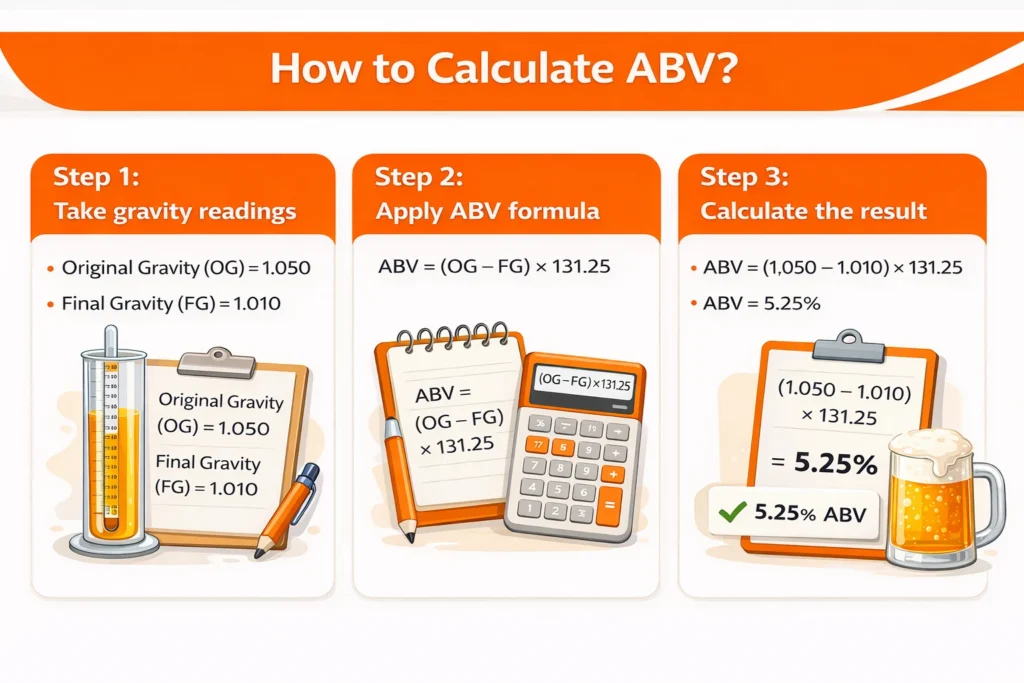
This example shows how the difference between original and final gravity determines the alcohol percentage in a fermented beverage.
What Is ABV (Alcohol By Volume)?
Alcohol by Volume describes the amount of alcohol present in a drink as a percentage. This measurement helps us to estimate the strength and intensity of a beverage. ABV plays an important role in brewing and fermentation because it represents the alcohol level in the final drink. ABV is the global standard for measuring the drink strength; you’ll see it printed on every beer, wine, and spirit bottle.
ABV Formula Explained
Once fermentation begins, yeast consumes the available sugars, producing alcohol (ethanol) along with carbon dioxide as byproducts. As this conversion takes place, the liquid’s density gradually drops since sugar is being transformed into alcohol. This final density measurement, taken once fermentation has finished, is known as the Final Gravity (FG).
The brewing gravity formula works by measuring the difference between OG and FG. This difference shows how much sugar has turned into alcohol during the process of fermentation. The gravity difference is then multiplied by a constant value to estimate the percentage in the beverage.
The constant 131.25 is used in brewing science to convert the gravity difference into an estimated alcohol percentage. It is based on brewing research that relates changes in specific gravity to alcohol production.
Key Points
Original Gravity vs Final Gravity
Original Gravity (OG) and Final Gravity (FG) are two measurements used to calculate Alcohol by Volume. OG represents the initial density of the liquid, while FG represents the final density at the end of fermentation.
The difference between these two values helps determine the alcohol percentage. Based on this gravity change, the alcohol content calculator estimates the alcohol content of the drink.
This table shows the percentage based on the difference between OG and FG.
Original Gravity (OG)
1.040
1.050
1.060
1.070
1.080
1.090
Final Gravity (FG)
1.010
1.010
1.012
1.015
1.018
1.020
Estimated ABV
3.94%
5.25%
6.30%
7.22%
8.14%
9.19%
How do you measure ABV
ABV is basically measured by comparing the liquid’s density before and after fermentation. Brewers commonly use tools like a hydrometer or refractometer to take gravity readings.
Steps to measure ABV:
To measure ABV, follow these easy steps:
- Measure Original Gravity using a hydrometer before fermentation.
- Allow the fermentation process to complete.
- Measure Final Gravity (FG) after fermentation.
- Apply the ABV formula ABV = (OG − FG) × 131.25.
- Use an ABV calculator to quickly determine the alcohol percentage.
This method provides a simple and reliable way to estimate alcohol content during the brewing and fermentation process.
Factors That Affect Alcohol Content

Fermentation time
Longer fermentation periods allow yeast to continue converting sugars into alcohol, which can increase the final ABV. However, excessively long fermentation may not always significantly boost alcohol levels beyond a certain point.
Yeast strain
Different yeast strains have varying alcohol tolerance and fermentation efficiency, which directly impacts alcohol production. Some strains produce higher ABV, while others may stop fermenting earlier due to lower tolerance levels.
Sugar content
Higher amounts of fermentable sugars in the wort provide more material for yeast to convert into alcohol. This increases the potential ABV, but only if the yeast is capable of fully fermenting those sugars effectively.
Brewing temperature
Temperature plays a critical role in yeast activity and fermentation speed. Optimal temperatures help yeast work efficiently, while temperatures that are too high or too low can slow fermentation or produce unwanted results.
Measurement errors
Incorrect use of hydrometers or refractometers can lead to inaccurate gravity readings. Even small errors in measuring OG or FG can result in incorrect ABV calculations, affecting the reliability of the final result.
Yeast Variability
Yeast doesn’t always perform consistently due to environmental or biological factors. Poor performance can prevent complete sugar fermentation, leaving residual sugars behind & lowering the expected alcohol percentage in the final product.
How ABV Affects Calories?
The number of calories is related to how much alcohol is present in a drink. Since alcohol contains approximately 7 calories per gram, drinks with higher ABV generally have higher energy content.
However, alcohol is not the only thing that affects how many calories are in a drink; a homebrew ABV calculator also factors in residual sugar when estimating final strength. If some sugars remain unfermented after fermentation, they also add extra calories to the drink. This is why sweet wines, dessert beers, or some ciders may contain more calories even if their ABV is moderate. In simple terms, we can say both the alcohol produced during fermentation and the remaining sugars in the liquid affect the total calorie content of a beverage.
Common ABV Calculation Mistakes
There are some common mistakes in estimating alcohol content that can result in an inaccurate alcohol percentage. If the gravity readings are not taken properly or the fermentation process is not complete, the ABV result will not be accurate; that’s why, during brewing, it is most important to correct both measurements and timing.
Common mistakes include:
Avoiding these mistakes helps you to ensure more accurate ABV calculations and provides a more reliable estimate of the final alcohol content in the beverage.

Why Use an Online ABV Calculator?
Using an online calculator offers several advantages for brewers and homebrew enthusiasts.
There are many benefits to it, such as:
An online Alcohol by Volume calculator makes it easier to analyze fermentation results and monitor alcohol strength.
Frequently Asked Questions (FAQs)
Conclusion
The ABV calculator helps estimate alcohol content using OG and FG. It is simple, reliable, and useful for brewers, though accuracy depends on proper measurements and fermentation conditions. It also helps brewers better understand and control the fermentation process.