ABV of Wine: Alcohol Content by Wine Type (Complete Guide)
Wine labels are full of information — grape variety, region, vintage, tasting notes. But the one number that actually tells you how strong the wine is? That tiny percentage near the bottom of the label. That’s the ABV, and it affects everything from how the wine tastes to how quickly it hits you.
This guide covers the alcohol content of every major wine type, breaks down ABV by grape variety, explains what pushes that number up or down, and tells you what the label percentage actually means in practice. If you make wine at home, you can also use our wine ABV calculator to get an accurate reading from your own gravity measurements.
What Is the Average ABV of Wine?
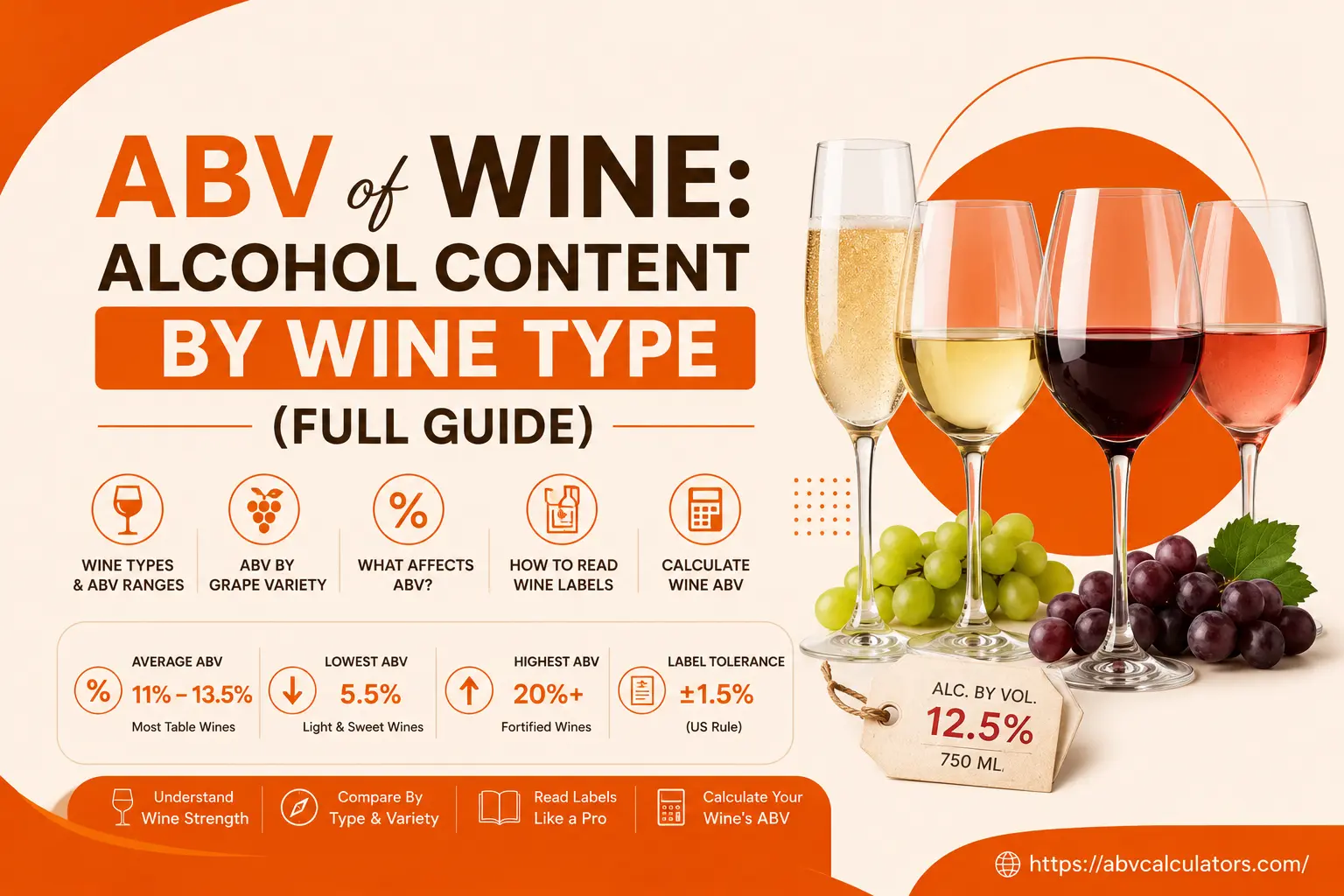
Most table wines sit between 11% and 13.5% ABV. That’s the range you’ll hit with the majority of reds, whites, and rosés on a restaurant menu or supermarket shelf.
The full spectrum is wider though. Light, low-alcohol styles like Moscato can come in as low as 5.5%, while fortified wines like Port and Sherry push up to 20% or beyond. So when someone asks how much alcohol is in wine, the honest answer is: it depends heavily on the type.
Wine Alcohol Content by Type
Here’s a breakdown of typical ABV ranges across all major wine styles, from the lightest sparkling options to the most intense fortified wines.
Wine Type
Sparkling
White (light-bodied)
White (full-bodied)
Rosé
Red (light-bodied)
Red (full-bodied)
Dessert
Fortified
ABV Range
10.5–12.5%
11–12.5%
12.5–14.5%
11.5–13.5%
11–13%
13.5–15%+
7–15%
15–22%
Common Examples
Prosecco, Champagne, Cava, Asti
Riesling, Vinho Verde, Pinot Grigio
Chardonnay, Viognier, White Rioja
Provence Rosé, White Zinfandel
Pinot Noir, Gamay, Beaujolais
Cabernet Sauvignon, Malbec, Shiraz, Zinfandel
Moscato, Late-Harvest Riesling, Sauternes
Port, Sherry, Madeira, Marsala
The pattern runs from sparkling at the low end to fortified at the top. Most of what people actually drink day-to-day falls somewhere in the middle, between 11.5% and 14.5%.
Red Wine ABV vs White Wine ABV
Red wines generally carry more alcohol than whites. Most reds fall between 12.5% and 15% ABV, while whites typically stay in the 11% to 13.5% range. That gap exists for a few reasons.
Red wines ferment with the grape skins included. Skins add tannins, and tannins need alcohol to balance them out structurally. Winemakers working with bold reds like Cabernet Sauvignon or Zinfandel often aim for higher ABV precisely to keep the wine from tasting sharp or bitter. Red wine grapes also tend to grow in warmer climates, which means more sugar in the grape at harvest and more potential alcohol after fermentation.
White wines take a different approach. The goal for most whites is freshness and acidity, not body. Lower alcohol keeps that brightness intact. Grapes like Riesling, Sauvignon Blanc, and Pinot Grigio are typically grown in cooler regions where sugar levels stay lower, which naturally produces a lighter wine.
Rosé and orange wine sit between the two. They share more structural similarities with white wine and usually land in the 11.5% to 13.5% range.
ABV of Wine by Grape Variety
ABV varies not just by wine color but by specific grape variety. A Pinot Noir and a Zinfandel are both red wines, but they can be worlds apart in alcohol content.
Here is what you can typically expect:
Moscato and light German Rieslings sit at the very bottom of the range. Zinfandel and Shiraz from warm climates like California and Australia consistently hit the high end among unfortified wines. Fortified wines like Port and Sherry are in a different category entirely because distilled spirit is added to them during or after fermentation.
What Affects the ABV of Wine?
ABV is not fixed by wine type alone. Several factors during growing and production push that number up or down.
Grape Sugar Content
Alcohol comes from sugar. During fermentation, yeast consumes the natural sugars in grape juice and converts them into ethanol and carbon dioxide. The more sugar in the grape at harvest, the more potential alcohol in the finished wine. This is why grape ripeness at harvest matters so much. Grapes picked late in the season carry more sugar and produce wines with higher ABV.
Winemakers often measure grape sugar using the Brix scale before fermentation starts. A reading of 22 Brix, for example, converts to roughly SG 1.092 and indicates a potential ABV of around 12.5% before fermentation begins. You can check any Brix reading against our 13 Brix to SG calculator for an instant gravity conversion.
Climate and Growing Region
Where the grapes grow has a direct effect on ABV. Warmer climates produce riper grapes with higher sugar levels, which means more alcohol after fermentation. Cooler climates produce grapes with lower sugar levels and wines that naturally come in lighter.
This is one of the reasons a Burgundy Pinot Noir and a California Pinot Noir taste so different even from the same grape variety.
Fermentation Decisions
Fermentation can be stopped early if the winemaker wants to preserve sweetness and keep alcohol lower. This is common with Moscato and many dessert wines, where stopping fermentation leaves residual sugar in the wine and results in a lower ABV.
Left to run fully, fermentation converts most available sugar into alcohol. The longer it runs and the more sugar available, the higher the final ABV.
Winemaking Techniques
Two techniques directly change the ABV beyond what fermentation alone would produce.
Chaptalization is the practice of adding sugar to grape must before fermentation begins. It is common in cooler regions like Burgundy and parts of Germany where grapes sometimes struggle to ripen enough. Adding sugar gives the yeast more to work with and raises the potential ABV.
Fortification is the addition of distilled spirit, usually grape brandy, to a wine during or after fermentation. This is how Port and Sherry reach 17% to 22% ABV. The added spirit also stops fermentation early, which is why fortified wines tend to retain more residual sugar and taste noticeably sweeter.
How to Measure the ABV of Wine
Commercial winemakers measure ABV using the difference between Original Gravity (OG) before fermentation and Final Gravity (FG) once fermentation is complete. The standard formula is:
ABV = (OG − FG) × 131.25
So if your wine starts at OG 1.090 and finishes at FG 0.995, the ABV works out to 12.4%. This method is standard across winemaking, brewing, and cidermaking.
Home winemakers can use a hydrometer or refractometer to take these readings. Or skip the manual calculation entirely and use our wine ABV calculator — enter your OG and FG and you get the result instantly. For tracking fermentation across multiple batches, our homebrew calculator gives you the same result with fields designed specifically for home setups.
Is the ABV on a Wine Label Accurate?
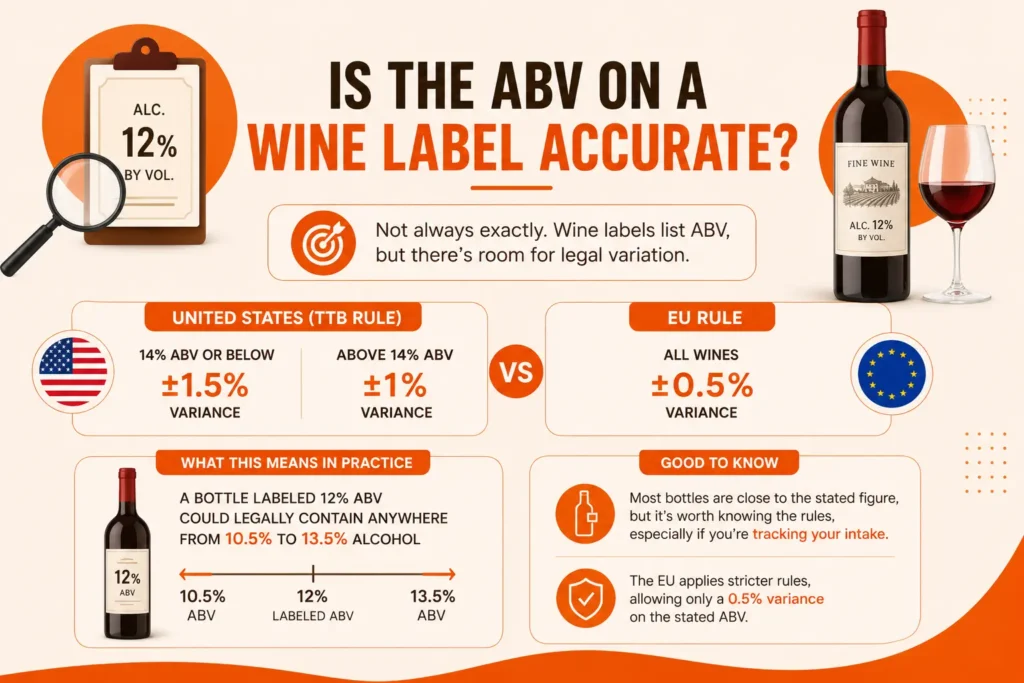
Not always exactly. In the United States, the Alcohol and Tobacco Tax and Trade Bureau (TTB) allows a variance of plus or minus 1.5 percentage points for wines at or below 14% ABV. For wines above 14%, the permitted variance tightens to plus or minus 1 percentage point.
What that means in practice: a bottle labeled 12% ABV could legally contain anywhere from 10.5% to 13.5% alcohol. Most bottles will be close to the stated figure, but it is worth knowing the rules, especially if you are tracking your intake carefully. The EU applies stricter rules, allowing only a 0.5% variance on the stated ABV.
What Do Wine Legs Tell You About ABV?
Swirl a glass of wine and watch the droplets that run down the inside of the glass. Those are called legs or tears, and they give you a rough visual clue about the wine’s alcohol content.
Higher-ABV wines produce thicker, slower-moving legs. This is because alcohol evaporates faster than water, creating surface tension differences that pull the liquid up the glass and let it drip back down in distinct streams. More alcohol means the effect is more pronounced.
Lower-ABV wines produce thinner, faster legs that run quickly and do not linger.
Legs alone are not a precise measurement. They are also affected by temperature, glass cleanliness, and residual sugar. But in a side-by-side comparison, a 14.5% Zinfandel and a 10.5% Prosecco will behave noticeably differently on the glass, and now you know why.
How ABV Affects Wine and Food Pairing
Alcohol level has a direct effect on how wine interacts with food, and matching the two well makes a real difference to how both taste.
Lower-ABV wines (under 12%) work best with lighter dishes. Their delicate structure does not overpower subtle flavors, and their acidity cuts through without adding heat.
Medium-ABV wines (12% to 13.5%) are the most versatile food wines. They have enough body to hold up to a range of flavors without dominating the plate.
Higher-ABV wines (13.5% and above) need bold, rich food to match their intensity. Pairing a 15% Zinfandel with a light salad would leave the wine tasting hot and the food tasting thin.
For a full comparison of how wine stacks up against other drinks by alcohol content, our Popular Beer ABV Guide covers lagers, ales, stouts, and everything in between.
How ABV Affects the Way Wine Tastes
ABV is not just a strength indicator. It actively shapes the texture and character of a wine.
Higher-ABV wines (13.5% and above) feel fuller and heavier on the palate. Alcohol is more viscous than water, so wines with more of it tend to coat the mouth more. You also get a warming sensation, especially at the back of the throat. Bold reds like Zinfandel or Cabernet Sauvignon demonstrate this clearly.
Lower-ABV wines (under 12%) feel lighter, crisper, and more refreshing. The lack of alcohol weight lets acidity and fruit flavors come through more cleanly. Think Vinho Verde, German Riesling, or a light Italian Prosecco.
Balance matters more than the number itself. A 14.5% wine that is well-made with the right acidity and tannin will not feel harsh. A poorly balanced 12% wine can still taste flat or overly alcoholic if the structure is off.
This is why winemakers talk about alcohol as one element within a wine’s overall structure, alongside acidity, sugar, and tannins.
Frequently Asked Questions (FAQs)
Conclusion
Wine ABV ranges from barely there to surprisingly strong, depending on the type, grape, and where it came from. Sparkling wines and light whites sit at the lower end. Big reds and fortified wines sit at the top. Most of what people drink day to day lands comfortably in the middle.
Now that you know what drives that label number, you can use it to choose more confidently, whether you want something light for a long afternoon or a bold red for a winter dinner. And if you make your own wine, calculate your wine’s ABV using your OG and FG readings to get an accurate result every batch.