What Does 12% ABV Mean? Everything You Need to Know
If you have ever picked up a bottle of wine and noticed “12% ABV” printed on the label, you may have wondered what that number actually tells you. Is 12% a lot? Is it low? How much alcohol are you actually drinking per glass?
This guide answers all of that in plain terms, with real numbers and practical context so you know exactly what 12% ABV means before you pour.
What Does 12% ABV Actually Mean on a Label?
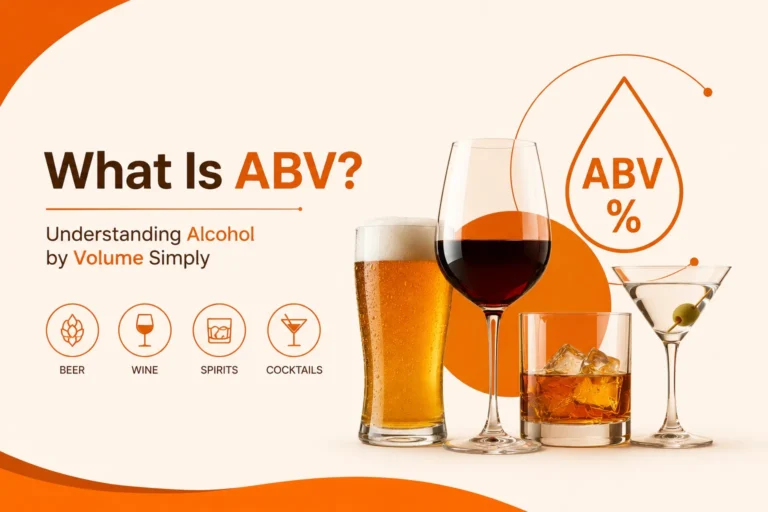
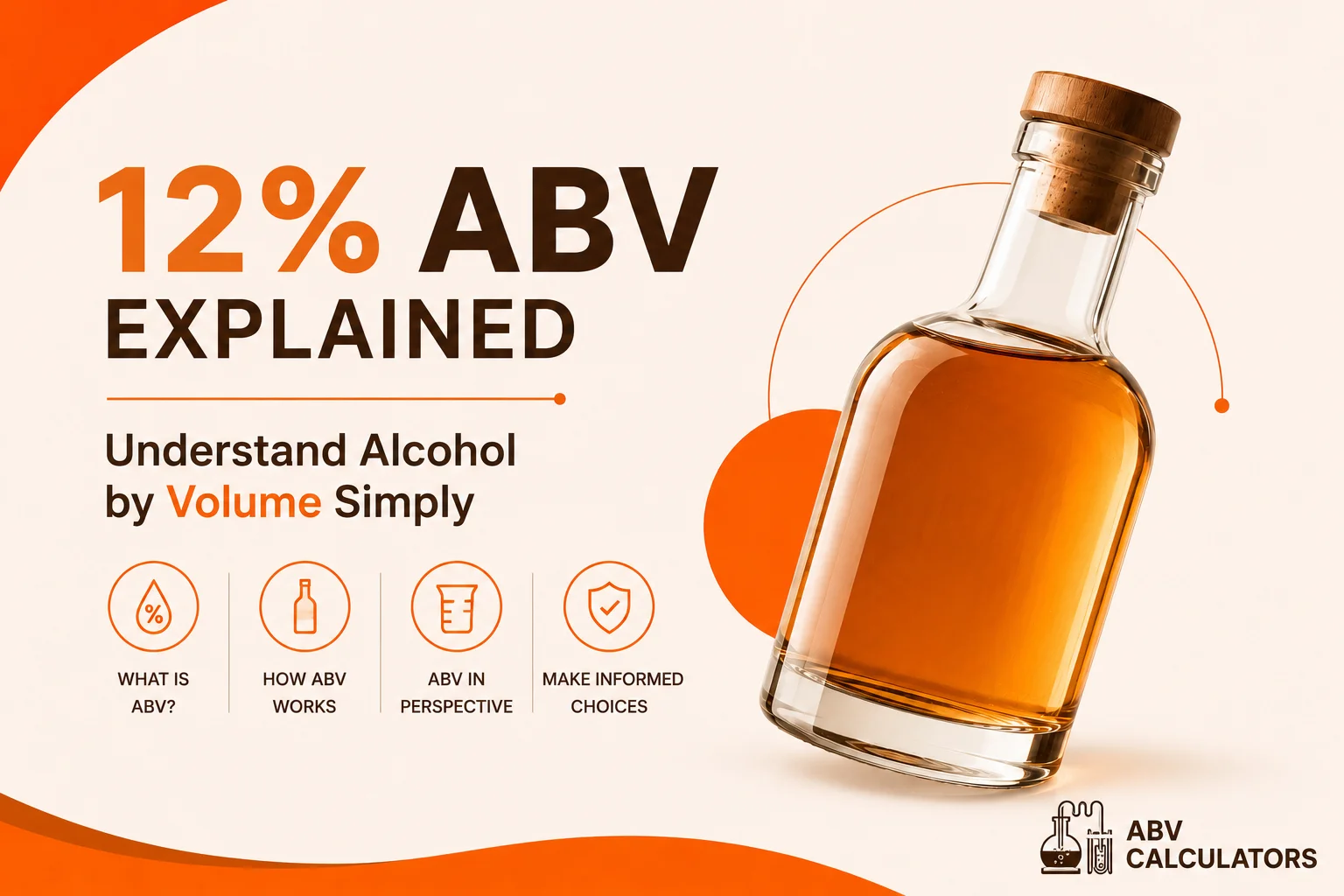
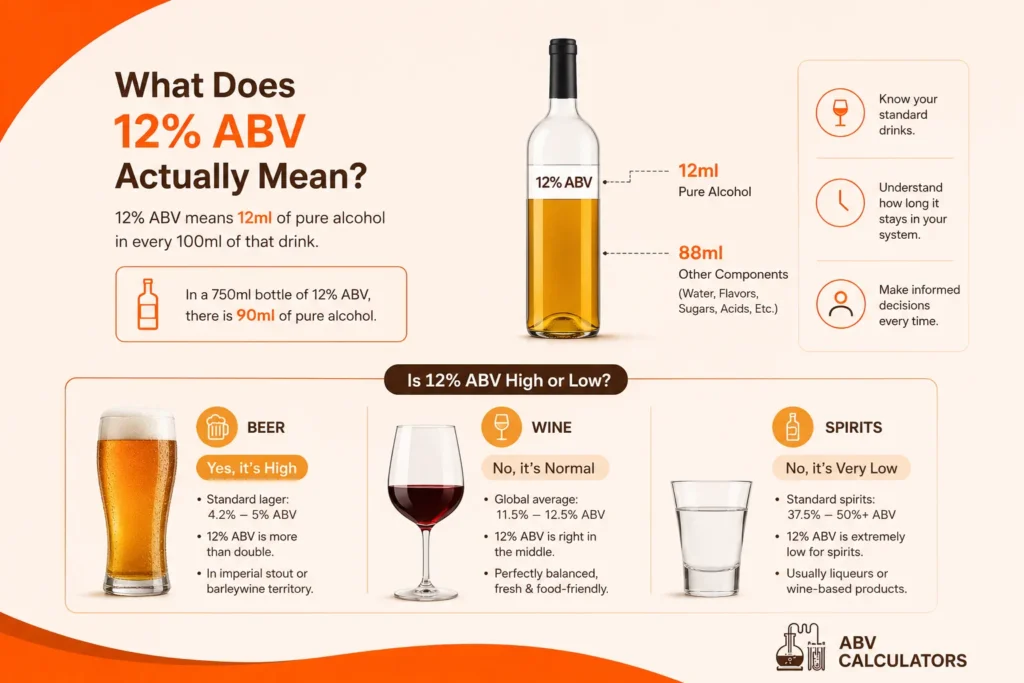
On any bottle, 12% ABV tells you one specific thing: 12 millilitres out of every 100ml of that drink is pure ethanol.
When a bottle says 12% ABV, it means 12 out of every 100 milliliters of that drink is pure alcohol. The remaining 88 milliliters is water, flavor compounds, sugars, acids, and everything else that gives the drink its character.
So in a standard 750ml bottle of 12% ABV wine, you are looking at exactly 90ml of pure alcohol sitting inside that bottle. That single fact helps everything else make sense.
That one number unlocks everything else in this guide, from how many standard drinks are in your glass to how long it stays in your system.
Is 12% ABV High or Low?
The answer depends entirely on what type of drink you are talking about.12% ABV sits in a very different position depending on whether it is on a beer label, a wine bottle, or a spirits bottle.
Is 12% ABV High for Beer?
Yes,12% ABV is very high for beer. Standard commercial lager sits at 4.2% to 5%. That is the reference point most beer drinkers carry in their heads. A beer at 12% is more than double that, closer to a strong cocktail in effect than a pint of lager.
A beer at 12% ABV is in imperial stout or barleywine territory. It is roughly two to three times stronger than a typical can of lager. If you pick up a beer labeled 12% ABV, treat it with the same respect you would give a strong cocktail.
Is 12% ABV High for Wine?
No. For wine, 12% ABV is right in the middle of normal. It is one of the most common alcohol levels you will see on a wine label, which is exactly why this question gets searched so often.
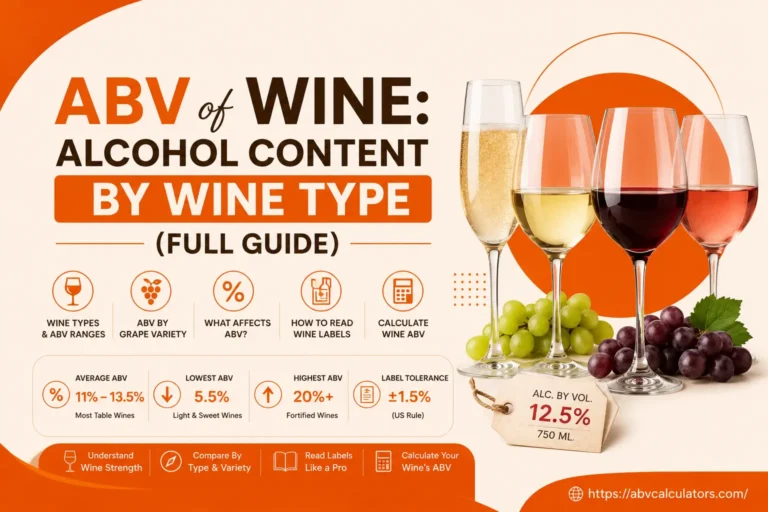
The global wine average sits around 11.5% to 12.5%. A bottle at 12% is not leaning light and it is not leaning heavy. It sits exactly where most food-friendly, everyday wines want to be. A wine at 12% sits comfortably in the fresh, medium-bodied range. It is not light and not heavy. It is, for most wine drinkers, simply a normal bottle.
Is 12% ABV High for Spirits?
Spirits do not come at 12% ABV in commercial production. Standard spirits like vodka, gin, rum, and whisky are bottled at 37.5% to 40% ABV at minimum, with many reaching 43% to 50% and above. If you see 12% ABV on a spirit, it is either a liqueur, a wine-based product, or a very unusual low-strength expression. For spirits, 12% is extremely low.
Why Wine Averages 12% ABV — The Historical Reason
The fact that 12% has become wine’s center of gravity is not an accident. It reflects centuries of winemaking tradition shaped by climate, biology, and practical limits.
In Mediterranean Europe, where the modern wine industry took root, grapes grown in moderate climates naturally accumulated enough sugar during ripening to produce wines in the 11% to 13% range once fermented. Warmer years pushed that higher. Cooler years brought it lower. But the average settled around 12% because that is what the land and the climate naturally delivered.
There is also a biological ceiling at play. Standard wine yeast tolerates alcohol up to approximately 12% to 14% before the environment becomes too harsh for it to keep fermenting. Before the development of high-tolerance yeast strains, 12% to 13% was roughly where natural fermentation stopped on its own. Wine did not get much stronger than that without intervention.
Today, winemakers can push fermentation further with modern techniques. But 12% remains the natural sweet spot where grapes ripen well, yeast ferments efficiently, and the resulting wine retains good acidity and freshness. It is not a trend. It is where wine naturally wants to be.
How Much Alcohol Is in a 12% ABV Drink?
Per Glass
Glass sizes vary, and that changes how much alcohol you are actually consuming even when the ABV stays the same.
Glass Size
150ml (5oz)
175ml
250ml
330ml
500ml
Drink Type
Standard wine pour
Pub wine measure (UK)
Large wine glass
Standard beer can
Pint glass
Pure Alcohol at 12% ABV
18ml pure alcohol
21ml pure alcohol
30ml pure alcohol
39.6ml pure alcohol
60ml pure alcohol
The difference between a 150ml and a 250ml glass is not just visual. At 12% ABV, that larger pour contains two thirds more alcohol than the smaller one.
Per Bottle
A standard 750ml wine bottle at 12% ABV contains 90ml of pure alcohol in total. Poured into standard 150ml servings, that gives you five glasses per bottle and five units of alcohol per bottle if you are calculating in the UK system.
12% ABV in Standard Drinks, US, UK, and Australia Compared
The phrase “standard drink” means something different in every country, which is why this creates so much confusion. The same 12% ABV wine poured at the same volume counts as a different number of standard drinks depending on where you are.
A US standard drink contains 14 grams of pure alcohol. A 150ml (5oz) pour of 12% ABV wine equals roughly one US standard drink. A full 750ml bottle equals approximately five US standard drinks.
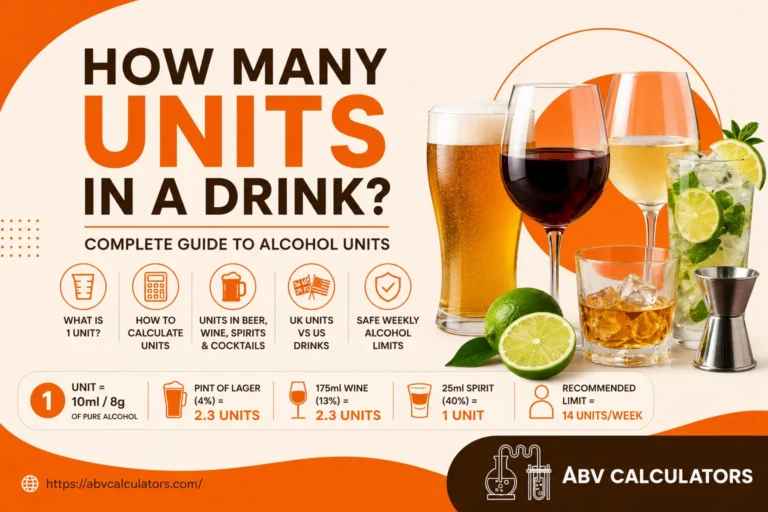
A UK unit contains 8 grams of pure alcohol. A 175ml glass of 12% ABV wine equals2.1 UK units. A full750ml bottle equals 9 UK units. The NHS recommends staying under 14 units per week, which is roughly one and a half bottles of 12% wine across the week.
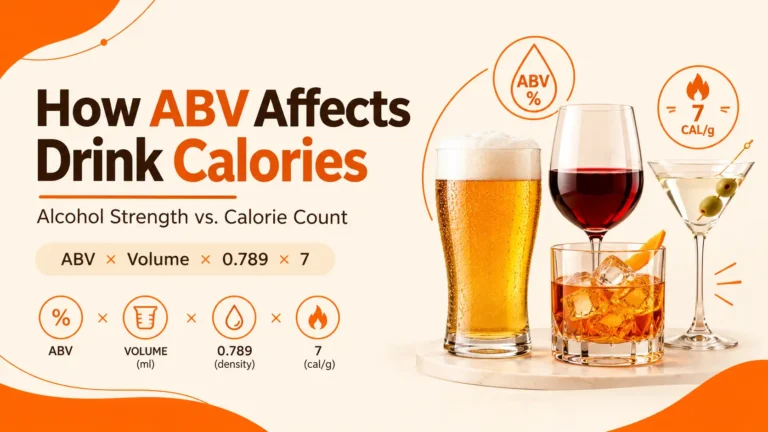
An Australian standard drink contains 10 grams of pure alcohol. A 150ml pour of 12% ABV wine equals 1.4 Australian standard drinks. A full bottle equals about 7.1 Australian standard drinks.The UK unit formula that works for any drink: ABV x volume in ml / 1000 = units. For 12% wine in a 175ml glass: 12 x 175 / 1000 = 2.1 units.
12% ABV and Calories — How Much Are You Actually Consuming?
A 12% ABV wine is moderate in alcohol but the calorie count still surprises most people.
A 150ml glass of12% wine contains approximately 18ml of pure alcohol. A standard 150ml pour of 12% wine lands between 120 and 140 calories in total. Add the natural sugars and other components in the wine and a standard 150ml glass typically lands between 120 and 140 calories total.
A full 750ml bottle of 12% wine delivers approximately 600 to 700 calories, depending on residual sugar levels. A dry white wine at the lower end, a fuller red at the higher end. For comparison, a 12% ABV beer in a 330ml can contains more alcohol by volume in that serving and can run from 150 to 200 calories depending on the style.
How Long Does 12% ABV Stay in Your System?
Most people assume one glass clears in one hour. For 12% wine that assumption is wrong — because a standard 150ml pour at 12% contains more than one unit.
Using that rate for a 12% ABV wine:

One standard 150ml glass at 12% ABV contains approximately 14 to 15 grams of alcohol. Your body takes roughly 1.5 hours to clear that completely.
A 175ml pub measure at 12% ABV contains 16.8 grams of alcohol. Clearance time is approximately 1.7 hours.
A full 750ml bottle at 12% ABV contains 90ml of pure alcohol, which is roughly 71 grams. At average metabolism, that takes approximately 7 to 9 hours to fully clear your system.
These figures assume an average adult. These are average figures for a healthy adult. Your actual clearance time will vary, but the direction is always the same: 12% wine takes longer to clear than most people expect from a single glass.
12% ABV and Driving, What You Need to Know
There is no universally safe number of drinks before driving because blood alcohol concentration (BAC) depends on too many individual variables. What is consistent across most countries is that even one 150ml glass of 12% wine raises BAC above zero, and for some people above the legal limit depending on weight and metabolism.
Key points worth knowing:
If you are driving, the only fully safe approach is to not drink at all.
What Does 12% ABV Feel Like to Drink?
The way alcohol feels depends not just on the ABV but on how quickly you drink, whether you have eaten, and your personal tolerance. That said, 12% ABV has recognizable characteristics.
In wine, 12% tends to produce a wine that feels light to medium in body. It will not feel warming or heavy in the way that a 14.5% red might. The alcohol integrates quietly into the overall flavor rather than announcing itself. This is part of why 12% wines are often described as food-friendly: they do not overpower the palate.
In beer, 12% feels very different. Because beer drinkers are accustomed to 5%, a 12% beer at the same serving size delivers more than twice the alcohol. The warming sensation in the chest and the quicker onset of effects are noticeable, often faster than expected.The key difference is context and expectation. 12% in wine is unremarkable. 12% in beer is a significant drink that deserves respect and a smaller serving.
Why 12% ABV Means Something Different in Beer vs Wine & Spirits
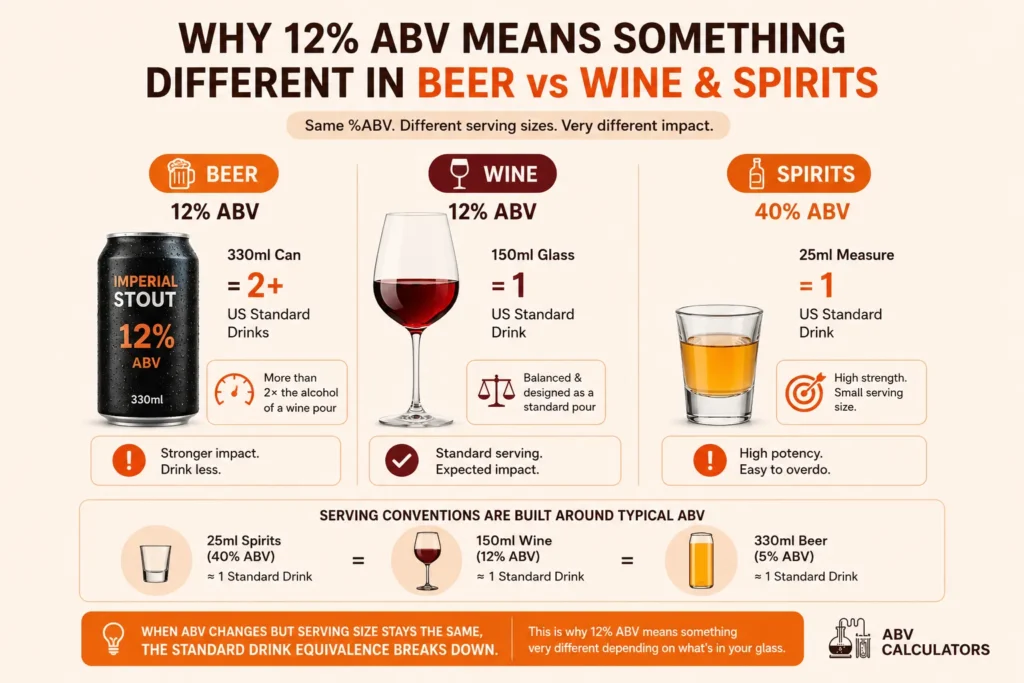
This is the single most important thing to understand about 12% ABV. The number is identical, but the real-world experience varies enormously depending on the drink.
Consider three scenarios. A 150ml glass of 12% wine is a standard serving containing one US standard drink. It is what a wine glass is sized for. A 330ml can of 12% beer contains more than twice as much liquid as a wine pour, delivering over two standard drinks in a single can. Nobody pours a pint of 12% wine. But plenty of people drink a full pint of 12% beer without stopping to consider that they have just consumed the equivalent of three standard drinks.
A mixed drink alcohol percentage calculator shows exactly how dilution changes these numbers once spirits are combined with mixers. Serving conventions are built around the typical ABV of each drink type. A 25ml spirit measure at 40% ABV, a 150ml wine pour at 12% ABV, and a 330ml beer at5% ABV all deliver roughly one standard drink. When ABV changes but the serving size stays the same, the standard drink equivalence breaks down entirely.This is why 12% means something very different depending on what is in your glass.
12% ABV and Food Pairing
The alcohol level in a wine shapes how it interacts with food in practical ways. At 12% ABV, a wine sits in a range where it tends to be versatile and food-friendly rather than dominant.
Lower-alcohol wines around 12% generally pair well with:
A 12% wine typically has enough acidity and fruit presence to hold its own at the table without feeling thin, but it will not compete aggressively with bold, rich dishes the way a 14.5% red might. If you want something that works across an entire meal, a 12% bottle is often a safer, more versatile starting point than something at the higher end of the alcohol scale.
What OG and FG Produces 12% ABV in Homebrew?
If you are brewing at home and targeting 12% ABV, the calculation starts with original gravity (OG) and final gravity (FG). OG measures sugar content before fermentation. FG measures what remains after the yeast has done its work.
The standard homebrewing formula is:
ABV = (OG minus FG) x 131.25
To hit 12% ABV, you need:
An OG of approximately 1.090 to 1.095 with a FG finishing near 1.000 to 1.002 will produce a 12% result. This is achievable with a high-attenuation wine yeast or a champagne yeast, both of which tolerate alcohol levels up to 14% or higher. Standard ale yeast typically maxes out around 8% to 11% and would stall before reaching 12%.
If you are brewing a high-gravity beer targeting 12%, you will likely need to add fermentable adjuncts alongside the malt to reach a high enough OG without creating an overly thick, unfermentable wort. You can use the alcohol calculator on this site to verify your OG and FG readings before and after fermentation.
What Drinks Are Commonly 12% ABV?
Here are the types of drinks where 12% ABV appears regularly:
12% ABV Converted to Proof
Proof is a measurement used primarily in the United States. The conversion is simple: proof equals ABV multiplied by two.
12% ABV = 24 proof
This means a 12% ABV wine would be labeled as 24 proof if the US proof system were applied to it. In practice, wine and beer labels use ABV rather than proof. Proof labeling is mainly used for distilled spirits in the US market.In the UK, the older proof system worked differently and is no longer used on commercial labels. Modern UK labels universally display ABV as a percentage.
Frequently Asked Questions (FAQs)
Conclusion
12% ABV is one number, but what it means depends entirely on what is in your glass. In wine, it is completely normal, centuries of tradition and natural yeast limits have always landed here. In beer, it is a serious drink, two to three times stronger than a standard lager. Same number, very different reality.
The data tells the full story. A standard 150ml glass at 12% gives you 18ml of pure alcohol, 120 to 140 calories, and roughly 1.5 hours of clearance time. A full bottle is 90ml of pure alcohol, and up to 9 hours before your system is clear. Now that you know the real numbers behind that small label, you know exactly what you are holding every time you pour a drink.