
Want to know how much alcohol is in your beer? A beer ABV calculator helps you quickly calculate alcohol content using Original Gravity (OG) and Final Gravity (FG). Whether you're a homebrew calculator ABV or craft brewer, this tool makes it easy to estimate beer strength after fermentation.
What Is a Beer ABV Calculator?
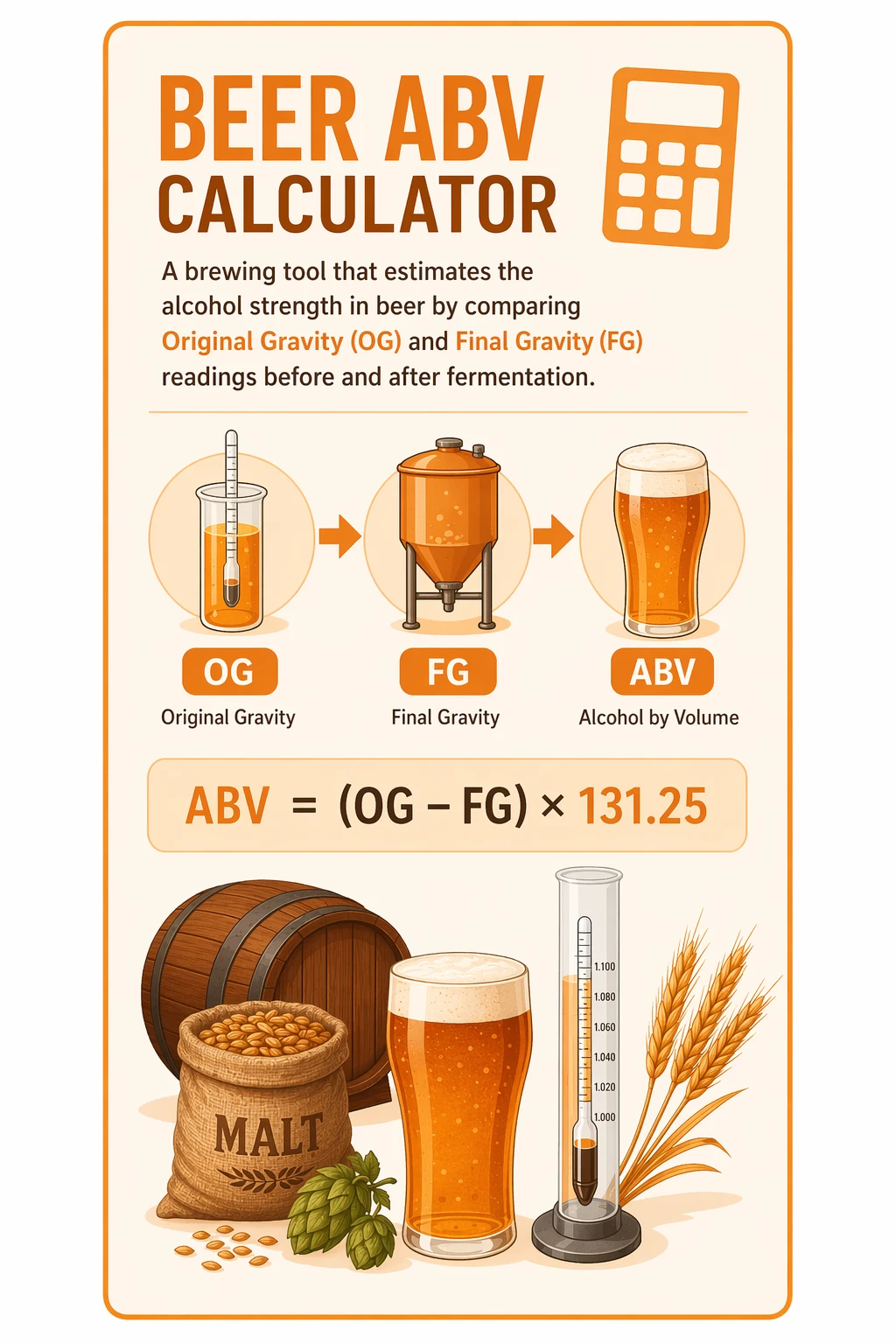
Beer ABV Calculator is a specialized brewing tool that estimates the alcohol strength. It compares beer density before and after fermentation. Brewers use Original Gravity and Final Gravity readings to calculate how much sugar converts into alcohol during fermentation. Using these differences in a formula, we can calculate beer alcohol by volume.
In simple words:
The beer calculator formula is this:
ABV = (OG − FG) × 131.25
When sugars convert into alcohol during fermentation, the gravity decreases, and this difference is used to calculate the alcohol content of the beer.

How to Calculate ABV in Beer
It is a simple process in brewing to calculate the alcohol strength of beer using a beer ABV calculator. By following a few basic steps, brewers can estimate the alcohol level produced during fermentation. Professional brewers rely on precise gravity readings to ensure accurate ABV calculations, as even small measurement errors can affect final alcohol content.
Beer-focused steps
Beer ABV Formula Used in Brewing
The standard beer ABV formula used in brewing is:
ABV = (OG − FG) × 131.25
This formula converts the drop in specific gravity into an estimated alcohol percentage. As fermentation progresses, this change reflects how efficiently malt sugars are converted into ethanol, which directly impacts the final beer alcohol content.
This brewing ABV formula works by converting the gravity drop into an alcohol percentage.
The constant 131.25 converts this density change into an estimated alcohol percentage, making it easier to calculate ABV beer accurately during brewing.
How Accurate Is Beer ABV Compared to Lab Testing?
Brewers often rely on gravity readings to estimate alcohol content, but this method provides an approximation rather than an exact measurement. The ABV formula is widely accepted in brewing, yet it may not be as precise as laboratory testing methods.

ABV Calculator
A beer ABV calculator provides a quick and practical estimate of alcohol content using OG and FG gravity readings, while a cocktail alcohol content calculator works differently since it accounts for ingredient dilution instead.
Lab Testing
Laboratory testing delivers highly precise alcohol measurements. Professionals use it when exact ABV verification is required for commercial or regulatory purposes.
Gas Chromatography
Gas chromatography is an advanced lab technique that directly analyzes ethanol levels in beer. It measures alcohol content with far greater accuracy than gravity-based methods.
Temperature Factor
Temperature affects gravity readings during measurement. If readings are taken outside the calibrated range, small errors can occur that impact the final ABV estimate.
Yeast Performance
Yeast behavior during fermentation directly influences ABV accuracy. Inconsistent yeast activity can cause sugar conversion to vary, leading to slight differences in estimated alcohol content.
Measurement Accuracy
Accurate gravity readings are essential for reliable ABV calculation. Even minor errors in recording OG or FG values can affect the final alcohol percentage.
Understanding Gravity in Beer Brewing
In beer brewing, specific gravity represents the density of wort and beer compared to water. Brewers rely on brewing gravity readings to track fermentation progress and alcohol development. Commercial brewers often record this as Plato to specific gravity instead, since Plato is the standard scale used in professional brewing documentation.
Original Gravity in Beer
Original Gravity (OG) measures wort density before fermentation, reflecting the amount of dissolved malt sugars extracted from grains.
Higher OG usually means:
More fermentable sugars available
Higher potential alcohol content
Fuller body and richer beer
Stronger malt flavor in the final beer
Watch on Longer fermentation time required
Final Gravity in Beer
Final Gravity (FG) is measured after fermentation completes. It shows how much sugar remains unfermented in the beer.
Lower FG indicates:
More sugar is converted into alcohol
Drier beer profile
Higher fermentation efficiency
Lighter body in the final beer
Stronger alcohol presence in the brew
Tools Brewers Use to Measure Beer ABV
Brewers depend on precise instruments to take accurate gravity readings in beer, which directly impact ABV calculation.
Hydrometer | A hydrometer is the most common tool used in beer brewing. It floats in liquid and measures density based on buoyancy. Easy to use for beginners, it provides direct OG and FG readings and is widely used in homebrewing. |
Refractometer | A refractometer measures how light bends through liquid to estimate sugar concentration. It requires only a small sample, making it a convenient tool for quick readings. It is most useful before fermentation begins, as it needs correction once alcohol forms in the liquid. |
Brewing Hydrometer Readings | Accurate readings are essential for any beer alcohol content calculator. Best practices take readings at the correct temperature, avoid bubbles in the sample, and record both OG and FG carefully. Proper gravity readings ensure reliable ABV estimation. |
Craft Beer ABV Explained
Craft beers often have higher alcohol content because brewers use more malt sugars and unique fermentation techniques.
Reasons why craft beer is stronger:
- Higher original gravity
- Specialized yeast fermentation
- Longer fermentation time
- Use of additional fermentable ingredients
The table below shows the typical ABV range of popular craft beer styles:
| Beer | ABV |
| IPA | 6–7% |
| Double IPA | 8–10% |
| Imperial Stout | 9–12% |
Using a craft beer ABV calculator, brewers can better understand the ABV in beer and adjust recipes accordingly.
Diluting or Blending Beer to Adjust ABV
Brewers sometimes adjust alcohol content after fermentation by modifying the final liquid.
Two common methods are being used:
These methods help to control final strength while maintaining flavor balance.
Typical ABV Range in Beer Styles
Different beer styles naturally fall into specific alcohol ranges based on ingredients and brewing methods. Understanding how much ABV in beer helps brewers maintain style consistency and meet consumer expectations.
Here is a general overview of average ABV ranges across common beer styles:
| Style | ABV |
| Light beer | 3-4% |
| Lager | 4-5% |
| Pale Ale | 5-6% |
| IPA | 6-7% |
| Stout | 7-8% |
Common Mistakes Brewers Make When Calculating Beer ABV

How to Increase ABV in Beer Safely
Brewers sometimes want to increase the alcohol content of beer while maintaining balance and flavor. This can be achieved by adjusting ingredients and fermentation conditions carefully.
Here are some safe ways to increase beer ABV:
Increase fermentable sugars
Adding more malt or fermentable sugars increases the potential alcohol content.
Use a high-alcohol-tolerant yeast
Some yeast strains can handle higher alcohol levels and continue fermenting efficiently.
Extend fermentation time
Allowing fermentation to complete fully ensures maximum sugar conversion into alcohol.
Optimize fermentation temperature
Maintaining proper temperature helps yeast perform efficiently without producing off-flavors.
Avoid overloading yeast
Too much sugar at once can stress yeast and reduce fermentation efficiency.
Balancing alcohol content with flavor is important, as higher ABV can affect taste, body, and drinkability.
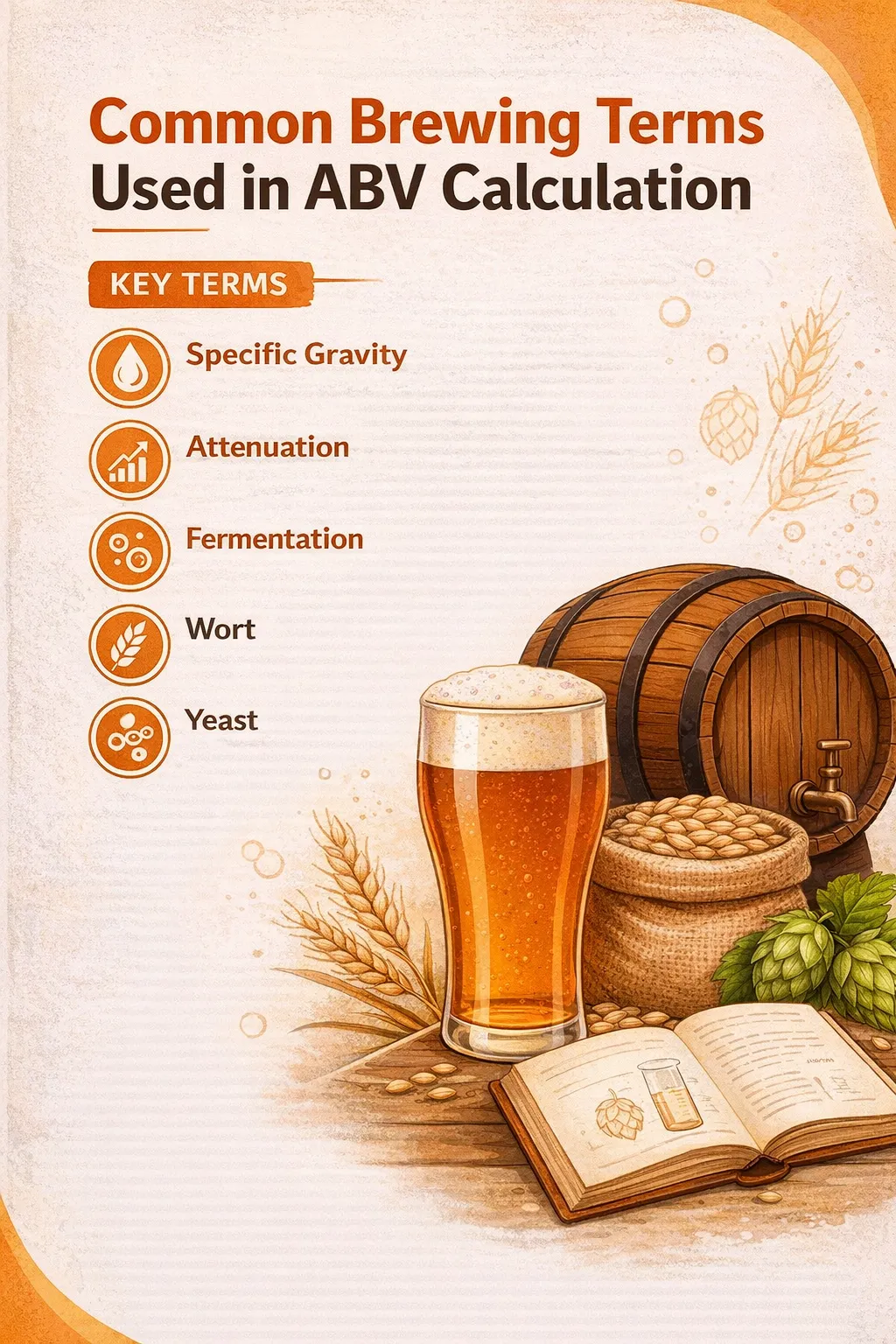
Common Brewing Terms Used in ABV Calculation
Understanding key brewing terms makes it easier to use a beer ABV calculator accurately. These are the most common terms every brewer should know before calculating alcohol content.
Frequently Asked Questions (FAQs)
Conclusion
A beer ABV calculator is a reliable and practical tool for both homebrewers and craft brewers to estimate alcohol content quickly. By understanding key concepts like Original Gravity, Final Gravity, specific gravity, and fermentation, brewers can calculate ABV with confidence. While lab testing offers greater precision, gravity-based calculation remains the most accessible method for everyday brewing. Whether you are brewing a light lager or a strong imperial stout, accurate ABV estimation helps you maintain consistency, improve recipes, and deliver the right strength every time.